
Comprehensive Guide to Warehouse Rentals in Slovakia: Market Analysis and Strategic Insights 2026
Late 2025 saw Slovakia’s industrial real estate sector hit a key juncture, with demand skyrocketing to 301,800 square meters ↗, indicating a vibrant growth path. This isn’t just about numbers; it’s a significant reconfiguration of Central and Eastern European logistics networks. For businesses eyeing warehouse space (sklady na prenájom), grasping these dynamics is vital to make savvy leasing choices in 2026 and beyond.
Fresh market insights from CBRE and Cushman & Wakefield highlight Slovakia’s rising importance in the European logistics arena. With prime rental rates steady at €5.50 per square meter and a development pipeline featuring 318,565 square meters under construction ↗, the market brings a mix of accessibility, modern infrastructure, and competitive pricing that demands thorough evaluation.
This detailed guide dives into Slovakia’s warehouse rental landscape, covering everything from strategic location choices to cost structures, aiding businesses in navigating the complexities of industrial real estate decisions. We’ll discover why major logistics firms are expanding their Slovak presence and how smaller companies can capitalize on the current market conditions to bag prime warehouse deals.
Through recent transactions, emerging trends, and future projections, we’ll deliver actionable insights for both newcomers to the Slovak market and established players wanting to enhance their logistics footprint. The world of industrial priemyselne priestory has shifted dramatically, and understanding these changes is key to selecting the right facility.
Current Market Dynamics and Key Trends in Warehouse Space Leasing
Entering 2026, Slovakia’s industrial real estate scene was booming, reflected by the Q4 2025 leasing activity of 301,800 square meters. That’s a whopping 25% increase from the previous quarter, showcasing the market’s resilience amidst global economic uncertainties. For businesses on the hunt for skladove priestory, this landscape presents both opportunities and challenges that call for astute navigation.
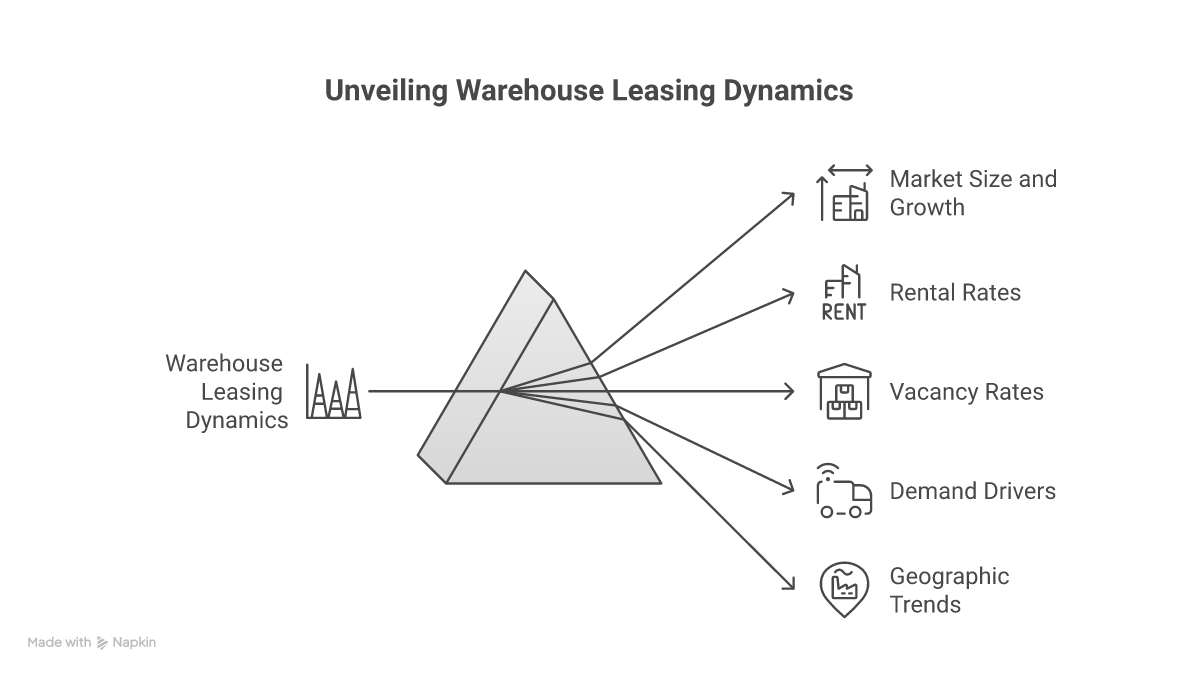
Vacancy rates unravel intriguing market dynamics. The national average hovers at 6.8%, but regional variations are noteworthy. Bratislava region, for example, reports a tight 4.2% vacancy, whereas eastern Slovakia’s emerging logistics hubs offer more space, with rates up to 8.5%. This geographical contrast opens doors for cost-savvy tenants open to secondary spots.
The construction scene is lively, with 318,565 square meters under development as of early 2026. Importantly, nearly half of the projects are speculative, signaling developers’ trust in enduring demand. This fresh supply is poised to maintain a healthy market balance while giving tenants more modern, efficient priestory na prenajom options.
Rental prices have held firm, with prime warehouse spaces fetching €5.50 per square meter monthly in top locales. However, prices range widely depending on location and specifications, from €3.80 in secondary sites to €6.20 for premium logistics spaces near major transport links. This spectrum offers flexibility for diverse business needs.
Tenant profiles keep shifting, with e-commerce and third-party logistics players (najom priestorov) spearheading 58% of leasing activity. Meanwhile, the automotive industry contributes 31% of deals, spotlighting Slovakia’s integral role in Europe’s automotive supply networks. This varied demand base bolsters market stability and encourages ongoing investment in facility quality.
Strategic Location Selection and Infrastructure Advantages
Situated at the nexus of European trade arteries, Slovakia offers warehouse operators distinct benefits. The nation’s infrastructure network, bolstered by 18,052 kilometers of maintained roads ↗ and its strategic location between Western Europe and fast-growing Eastern economies, lends itself to multiple effective priemyselne nehnutenosti strategies.
Recent investments have significantly boosted transport links, with €2.8 billion earmarked for road and rail upgrades through 2025. The D1 motorway extension has notably enhanced east-west logistics capability, cutting transit times between Bratislava and Košice by 18%. Such infrastructure developments directly enhance the appeal of warehouse locations.
Bratislava persists as the prime logistics hub, benefitting from its proximity to Vienna, Budapest, and Prague. The city’s warehouse cluster now surpasses 2.8 million square meters of modern space, with average occupancy costs 15-20% lower than similar setups in Western European capitals. This cost edge must be weighed against tighter vacancies and higher rent premiums.
Up-and-coming secondary markets warrant thorough consideration. Trnava, Nitra, and Žilina are witnessing substantial logistics growth, fueled by the automotive manufacturing sector and better infrastructure links. These areas provide rental rates 20-30% below Bratislava’s, still offering solid access to major markets.
For operations focused on cost, Eastern Slovakia is alluring. With the Košice region’s strategic spot near Hungarian and Ukrainian borders, companies serving Eastern Europe find compelling advantages. New developments here include state-of-the-art warehouse facilities at rental rates 35% less than in Bratislava.
Infrastructure and Connectivity Assessment for Logistics Spaces
Transport infrastructure quality hugely influences warehouse efficiency. Slovakia’s motorway network, though developing, ensures good connections to key European locales. Data indicates that 89% of industrial parks boast direct motorway access, with an average distance of 3.8 kilometers to the nearest interchange.
Rail infrastructure further enriches location choices. With 3,623 kilometers of railways and ongoing investment in intermodal terminals, rail-linked facilities offer strategic perks for certain operations. The Žilina-Teplička terminal, wrapped up in 2024, exemplifies the potential of rail-centric logistic setups.
Last-mile delivery imperatives are becoming essential for picking warehouse locations. Urban warehouses, though pricier, deliver significant upsides for e-commerce ventures. The average delivery radius from Slovak warehouses covers 2.1 million consumers within two hours, positioning the country as an effective regional hub.
Cost Structure Analysis and Rental Terms
Total occupancy costs in Slovakia require a thorough understanding beyond basic rent figures. Prime warehouse costs stand at €5.50 per square meter monthly, but additional expenses can bump this up by 15-25%. Service charges, spanning €0.65 to €0.90 per square meter, encompass maintenance, security, and shared area operations.
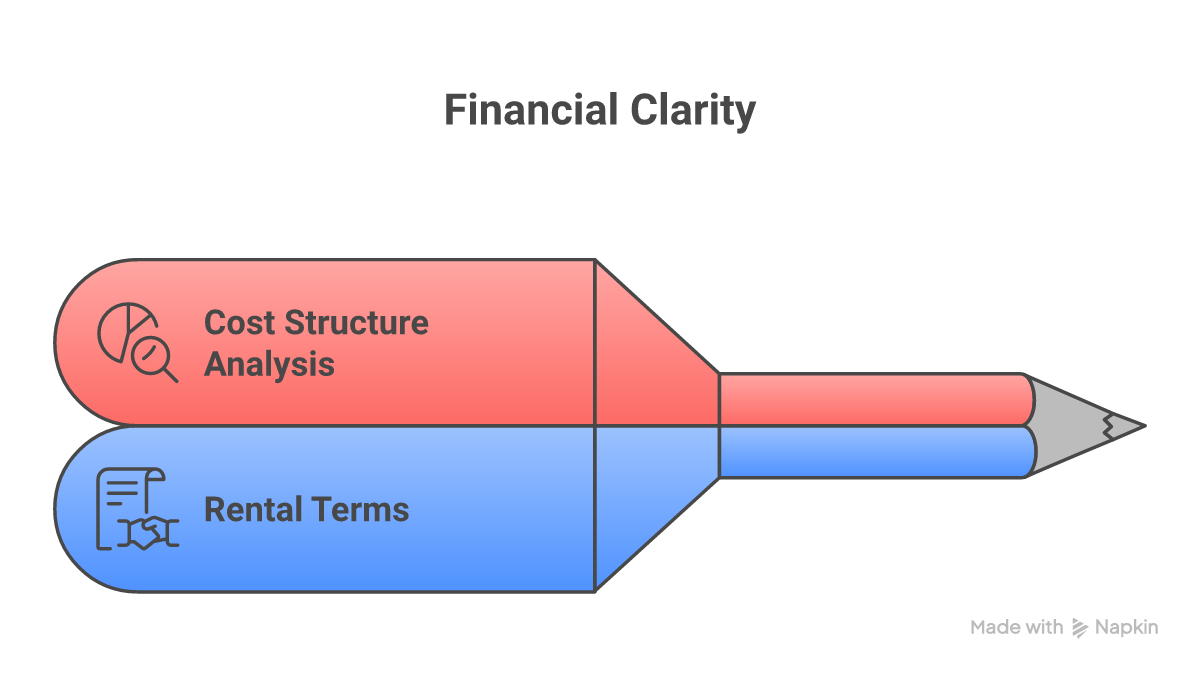
Energy expenses play a pivotal role in warehouse management. Modern, energy-efficient buildings with solar installations bring operating cost savings of €0.30-0.45 per square meter monthly over older edifices. This gap should factor into total cost deliberations when weighing options.
Lease lengths in Slovakia typically span 3 to 7 years for standard warehouses, with extended terms available for build-to-suit projects. Rent indexing aligns with HICP inflation, with caps becoming more common in new contracts. Grasping these structural details aids in negotiating favorable deals.
Security deposits and bank guarantees generally fall between 3 to 6 months’ rent, with some wiggle room based on tenant credibility. While early termination clauses exist, they usually come with hefty fines unless hashed out during strong tenant market phases.
Incentive packages vary with location and market conditions. Trends show rent-free periods of 2-4 months per lease year for longer durations, while fit-out cost contributions range from €10-25 per square meter. These benefits need careful consideration in overall occupancy cost assessments for sklady na prenajom.
Technical Specifications and Facility Standards
Modern Slovak warehouses adhere to high technical norms, featuring clear heights of 10 to 12 meters in standard units. Premium logistics facilities push to 14 meters, optimizing cubic storage. Floor loadings typically range from 5 to 7 tonnes per square meter, fitting most industrial uses.
Energy efficiency has become critical, with new builds aiming for BREEAM ‘Very Good’ or higher. Solar panels are commonplace, with many sites generating 15-25% of energy needs in-house. This trend complements corporate sustainability while trimming operating costs.
Column spacing often adheres to a 12×24 meter grid, though modern sites offer wider spans for added flexibility. Dock levelers feature at ratios of 1:800 to 1:1000 square meters, with drive-in doors tailored to specific operational needs.
Fire safety standards meet European norms, with ESFR sprinkler systems prevalent in new sites. Insurance demands shape these technical specs, especially for specific goods storage.
Office spaces within warehouses typically use 5% to 7% of total area, with expansion options available. Modern facilities increasingly include staff amenities like canteens and rest zones, highlighting the significance of workforce retention in competitive sectors.
Market Entry Strategy and Negotiation Approaches
Securing warehouse space in Slovakia requires a strategic market entry approach. Initial market research should cover both existing and upcoming options, as aligning timing can greatly affect selection and bargaining leverage.
Working with local market experts proves invaluable, as many opportunities aren’t widely advertised. These professionals often have ties with multiple developers and can provide comparative insights across various projects and locales.
Timing is key in negotiations. Current trends indicate procurement timelines of 4-6 months for existing spaces and 12-18 months for tailor-made projects. Understanding these timelines aids in planning a market entry effectively.
Meticulous technical due diligence is essential, especially for older properties. Evaluating building systems, maintenance records, and energy performance is crucial. Environmental factors, such as soil conditions and flood risks, also demand attention.
Negotiation strategies should align with market cycles and regional differences. Current conditions support varied methods in prime versus secondary markets, with more flexibility in high vacancy areas.
Legal and Administrative Considerations
Slovakia’s commercial lease laws align with continental European standards, with specific clauses for industrial properties. Knowing these legal frameworks aids in securing favorable lease terms and protecting tenant interests.
Administrative tasks include necessary permits and registrations, particularly for certain industrial activities. Engaging early with authorities helps prevent delays in facility use and operation start-up.
Environmental compliance is evolving, with a growing emphasis on sustainability and energy efficiency. New regulations may impact both current operations and future plans, demanding careful thought in long-term lease agreements.
Future Market Outlook and Trends for Commercial Storage Spaces
The outlook for Slovakia’s warehouse market remains optimistic through 2026 and beyond. Development data indicates ongoing supply growth, with 318,565 square meters presently in construction and more projects in planning.
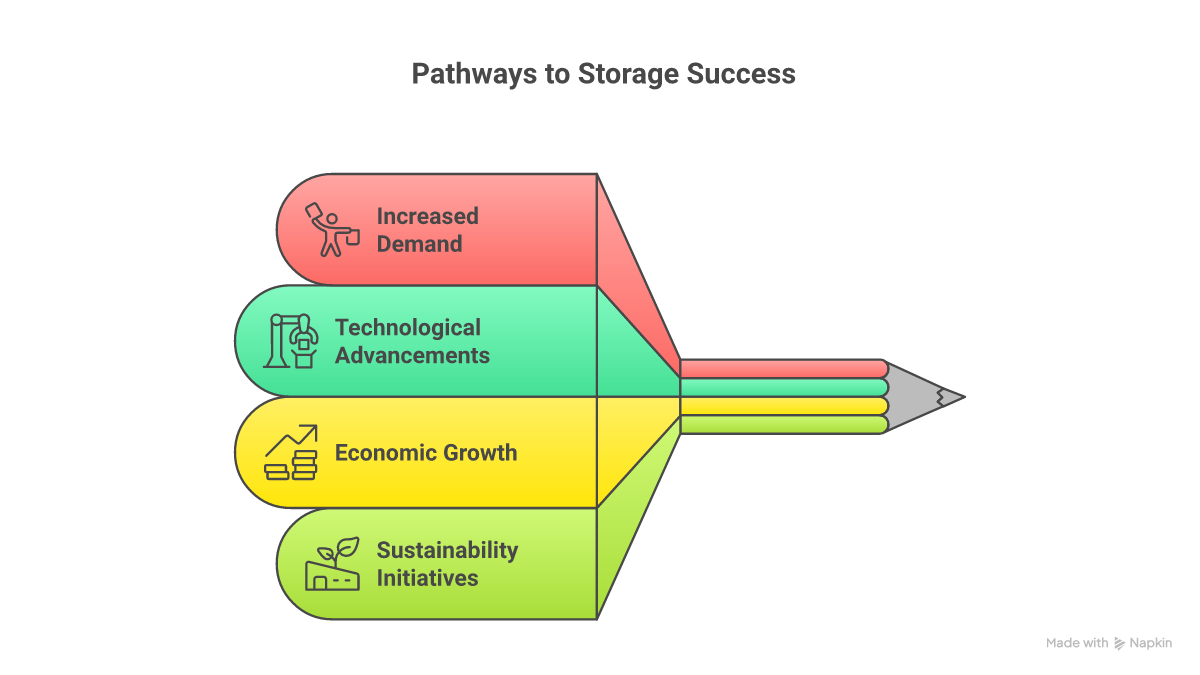
The rise of e-commerce continues to drive demand, with online retail expected to reach 16% penetration by 2027. This supports ongoing investments in cutting-edge logistics facilities, particularly for last-mile delivery operations.
Sustainability is set to shape facility specs and operations increasingly. New developments focus on energy efficiency, renewable energy use, and minimizing environmental impact, fitting corporate ESG goals.
Technology’s role becomes more pivotal, with automation systems and digital infrastructure impacting facility design and specs. Modern warehouses integrate provisions for robotics and automated storage systems increasingly.
Regional growth patterns hint at continued expansion in secondary markets, bolstered by infrastructure upgrades and cost benefits. This trend could present opportunities for tenants pursuing economical alternatives to prime spots.
Conclusion and Strategic Recommendations
Slovakia’s warehouse market offers numerous opportunities for businesses seeking logistics solutions in Central Europe. Current conditions provide a balanced stage for tenant negotiations, with options across various location and specification categories.
Strategic success in acquiring warehouse space hinges on thorough location analysis, comprehensive technical due diligence, and understanding total occupancy costs. Partnering with seasoned local market advisers aids in navigating complexities and uncovering opportunities efficiently.
Companies entering or expanding in Slovakia should weigh both immediate needs and long-term flexibility. The current development stream offers chances to secure modern, efficient facilities in line with emerging operation demands and sustainability targets. For those seeking prenajom skladov, the time is ripe to negotiate favorable terms while ensuring facilities meet evolving business requirements.