
Industrial Parks in Slovakia: A Comprehensive Guide to Development Criteria and Market Standards 2026
As we hit 2026, Slovakia’s industrial real estate scene is undergoing a significant transformation. With industrial park occupation climbing to a remarkable 96.2% in key logistics hotspots and vacancy shrinking to a mere 3.8%, there’s a noticeable demand for wisely positioned industrial spaces. This isn’t just a nod to Slovakia’s regional growth, but a broader change in Europe’s supply chain dynamics.
The pace of evolution in Slovakia’s industrial parks has picked up immensely since 2024, fueled by €3.2 billion worth of fresh industrial investments ↗ and the arrival of major international firms. Giants like DeJong, BRD Thermea, and Jiangsu have set up shop, cementing Slovakia’s rep as a prime industrial spot in Central and Eastern Europe.
This detailed guide dives into the key elements shaping industrial park growth in Slovakia, covering everything from technical specs and infrastructure needs to strategic site choices and the regulatory landscape. Whether you’re developing, investing, or using these facilities, getting a grip on these aspects is crucial for tapping into Slovakia’s industrial market success.
Recent figures from Cushman & Wakefield indicate prime industrial yields squeezing to 6.00% by Q4 2024 ↗, pointing to rising interest from institutional investors and setting higher standards for quality in development.
Location and Infrastructure Requirements for Industrial Site Development
Picking the right spot is crucial for any industrial park project. According to SARIO, Slovakia’s investment and trade agency, the best locations must juggle factors like access, workforce availability, and infrastructure capability. Modern industrial parks here need spots with at least 50 hectares for large-scale projects ↗.
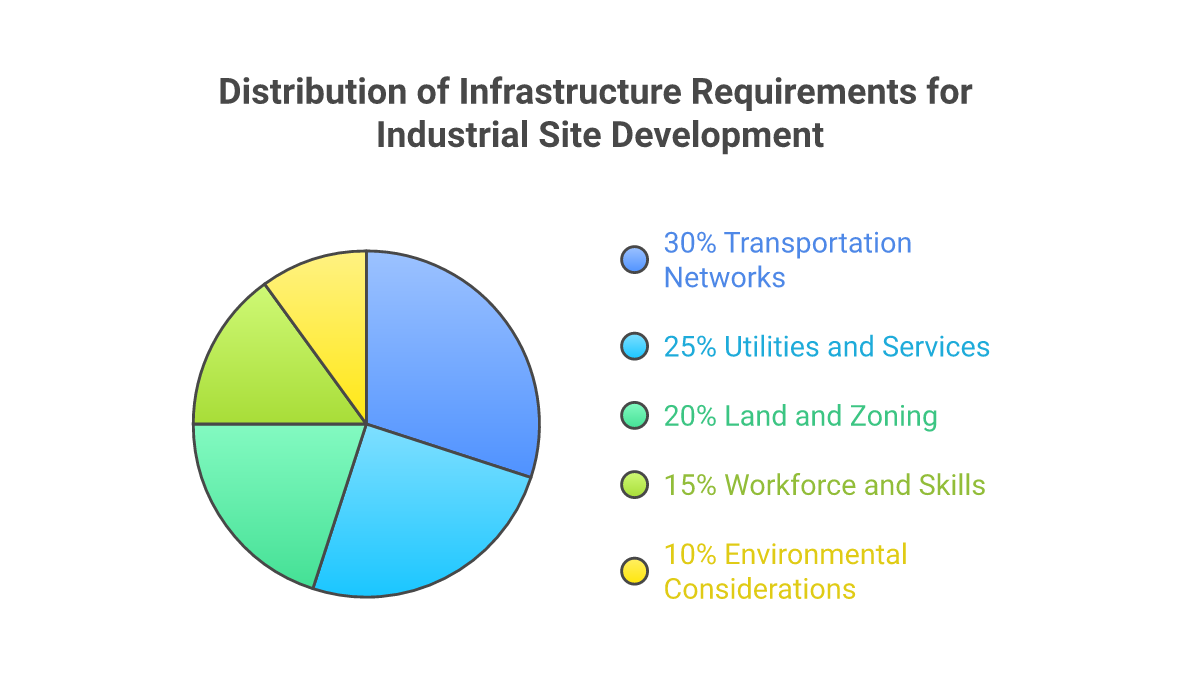
Transport infrastructure is vital, requiring easy multi-modal connections. This includes close proximity to Class I highways (within 5km), rail links for freight, and international airports reachable within 45 minutes. Eastern Slovakia is emerging as a hot spot, offering excellent logistics links to both the EU and the burgeoning Eastern European markets.
Robust utility infrastructure is a must for industrial operations. Current standards demand at least 20 MW power capacity per 100 hectares, high-voltage redundancies, and water systems capable of supplying 250 cubic meters per hectare daily. New parks often feature smart grids and on-site renewable energy setups to meet sustainability goals.
Digital connectivity has become crucial too, with fiber and 5G now baseline requirements. New builds need to offer at least 10 Gbps backbone networks and have backup telecom pathways to support Industry 4.0 manufacturing.
Environmental footprints are under scrutiny due to EU regulations. Parks must maintain at least 15% green space and have stormwater systems in place that can handle extreme weather and meet water quality standards.
Technical Specifications and Building Standards
Today’s industrial facilities in Slovakia must meet tough technical standards that align with EU norms and market needs. The minimum clear height has risen to 12 meters for warehouses and 14 meters for automated storage, with some specialized buildings needing up to 18 meters to fit automated systems.
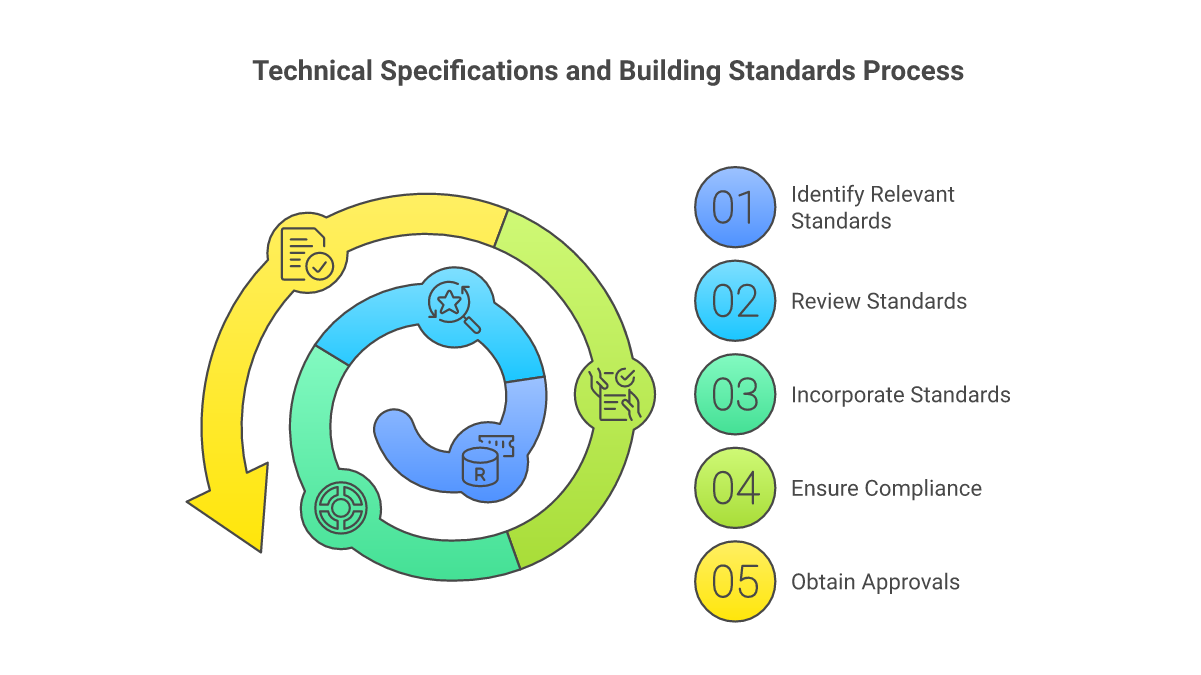
Floors need to withstand heavy loads, with a minimum of 5 tons per square meter for warehouses and 7 tons for heavy manufacturing areas. Specific zones may require up to 10 tons per square meter for particular processes. When it comes to floor flatness, the DIN 18202 standards apply, with tight tolerances to support automated operations.
Energy efficiency rules are stricter now, with facilities needing to achieve at least an A2 Energy Performance Certificate. This typically involves high roof and wall insulation, triple-glazed windows, and efficient HVAC systems with heat recovery.
Structural designs must meet specialized industrial demands, including specific column spacing and foundations that accommodate equipment sensitive to vibrations. Roofs should support solar panels and mechanical systems, with a minimum load capacity of 30 kg/m².
Sustainable Development Requirements
Environmental sustainability has become central to Slovakia’s industrial park development. New projects must meet at least BREEAM “Very Good” or LEED Silver standards, with many developers aiming higher to satisfy occupier preferences.
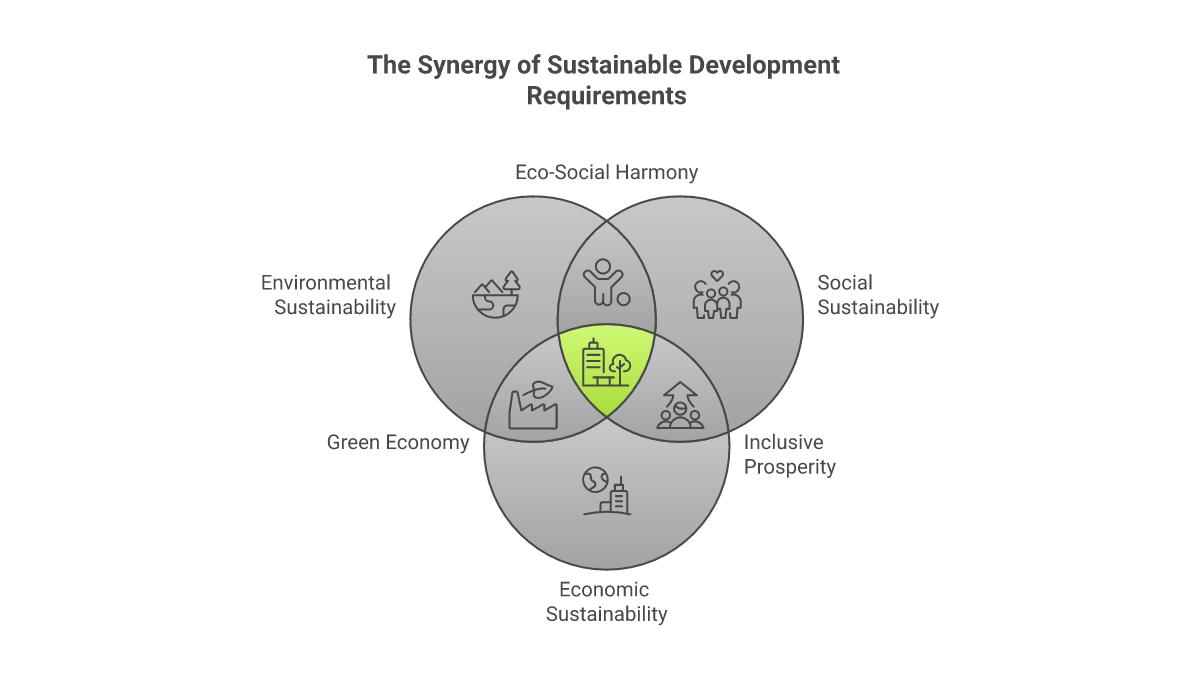
Energy systems must include renewable sources, with at least 20% of electricity coming from on-site generation. Solar arrays are common, with capacities of 0.5 MW per 10,000 square meters of roof space. Energy storage systems need to cover at least four hours of critical power use.
Water-saving innovations include necessary rainwater collection setups to capture 95% of rainfall, greywater recycling for non-drinkable uses, and smart irrigation systems for landscaping. New sites must achieve at least a 30% cut in potable water use compared to old benchmarks.
Waste management should aim for at least a 70% diversion rate during operations, with built-in sorting and recycling capabilities. Construction waste plans need to show that at least 75% of waste is diverted from landfills during building phases.
Operational Requirements and Warehouse Management Standards
Smooth operation of industrial parks depends on strong management and clear operational standards. Regulations now call for round-the-clock security with at least two access points, full CCTV coverage of common spaces, and secure access control systems in sync with tenant protocols.
Traffic systems must handle peak volumes while maintaining a minimum Level of Service (LOS) C at intersections. Parking ratios should offer one space per 100 square meters of warehouse space, plus truck waiting areas making up 2% of the total building space.
Facility management must link with tenant building systems using standard protocols. It’s crucial for real-time monitoring of energy and environmental conditions, with data kept for at least two years.
Market Standards and Commercial Requirements
Slovakia’s industrial market has reached a more mature stage, establishing firm commercial standards for park development. Lease terms now typically range from 5 to 10 years for warehouse space and up to 15 years for manufacturing areas, mostly under triple net lease structures.
Technical specs must allow for flexible division of space with minimal unit sizes of 1,000 square meters for storage and 2,500 square meters for manufacturing. Efficiency ratios should surpass 95% for single-tenant and 92% for multi-tenant facilities.
Service charges are standardized between €0.50-0.65 per square meter monthly for essential services, with additional charges for specific infrastructure upkeep. Reserve funds must be at least 10% of yearly operating costs.
Future Industrial Real Estate Trends and Development Considerations
Looking forward to the years 2026-2030, there are several trends that will influence Slovakia’s industrial park development. The adoption of autonomous vehicle infrastructure, such as dedicated lanes and charging stations, will be common. Also, improved digital infrastructure will support higher levels of automation and robotics, needing advanced power and data networks.
Sustainability requirements will keep evolving, with carbon-neutral goals boosting investments into renewable energy and circular economy setups. The trend toward mixed-use industrial parks, including research and innovation centers, requires flexible building designs and better amenities.
Conclusion
The way standards for industrial parks in Slovakia have evolved mirrors the market’s growth and the increasingly sophisticated demands of occupiers. Successful projects must harmonize technical excellence with operational efficiency and adhere to strict sustainability norms. As global interest continues to pour in, staying competitive means staying ahead of tech changes and shifting tenant expectations.
For developers and investors, fully grasping and implementing these detailed requirements is crucial to gain a competitive edge in Slovakia’s dynamic industrial real estate scene. The ongoing expansion of the industrial park sector, underlined by strong market fundamentals and strategic location perks, signals a steady demand for top-tier industrial spaces meeting these high standards.