
Strategic Operational Transformation through Parcel Sorting Automation: A Comprehensive Analysis
Fast forward to 2026, and you’ll find the global parcel sorting automation market at a significant $3.14 billion milestone. With forecasts predicting a climb to $4.19 billion by 2027, there’s more beneath these figures than meets the eye. Automation is doing more than just tweaking the logistics of parcel handling; it’s reshaping its very economics. For logistics companies grappling with 20-30% annual volume surges and facing 15% upticks in labor costs, automation has shifted from being a competitive edge to becoming a crucial necessity.
Understanding the importance of this transformation means diving into current market dynamics. Recent analyses show that warehouse operations now constitute 59.55% of logistics automation revenue ↗, buoyed by the spike in goods-to-person systems and robotic sortation. This transition underscores a deeper shift in logistics thinking – from merely seeking incremental efficiency to architecting a complete operational overhaul.
In this analysis, we’ll take a close look at how top logistics players use parcel sorting automation to carve 25-30% off labor costs and speed up order fulfillment by threefold. Moreover, we’ll delve into the strategic stakes these technologies hold for maintaining a competitive edge in a market that demands more each day.
Exploring the nuances of parcel sorting automation, we’ll see how the application of AI, robotics, and advanced analytics is pioneering new operational benchmarks, changing the game in terms of speed, precision, and scalability demands.
Current Market Landscape and Growth Drivers
How is the parcel sorting automation market shaping up in 2026? Primary studies point out that investments in warehouse automation are yielding historic returns, with automated facilities showing 40% superior throughput over traditional methods. This gap is fueling a swift uptake across the industry.

The unstoppable growth of e-commerce stands as the prime driver, with global parcel volumes hitting 217 billion in 2025 and expected to surge past 240 billion by the next year. This avalanche of volume is maxing out the capabilities of traditional sorting operations, where maintaining accuracy above 95% becomes a daunting task.
Insights from the market reveal that those embracing full-scale automated parcel sorting achieve a 99.9% accuracy rate, cutting per-parcel handling costs by 35-40%. Such figures have caught the executive spotlight, pushing an accelerated automation adoption across the board.
The labor market paints a compelling picture for the automation imperative. With warehouse labor expenses climbing by 15% annually in key areas, the ROI for automation looks more enticing than ever. It’s reported that automated sorting systems usually pay for themselves in 24-36 months, with some busy operations breaking even in just a year and a half.
Take a look at how regional variances paint further clarity. North America takes the lead with an 80% market presence in advanced automation solutions, while Asia-Pacific regions show the quickest growth, with annual investments rising by 13.6%.
Technology Integration and Innovation in Parcel Handling Systems
Parcel sorting technology has grown leaps and bounds, with AI and machine learning at the forefront of system honing. Recent upgrades show AI-powered systems manage 100,000 parcels an hour, tripling the output of older versions.
The rise of computer vision and robotics has become a game of differentiation in today’s sorting centers. Cutting-edge vision systems identify and sort packages with a breathtaking 99.99% precision, even when handling the most diverse items and packaging styles. This has become invaluable for e-commerce operations awash with varied product types.
IoT sensors and real-time analytics integration have made predictive maintenance and adaptive system refinement possible. Leading centers report slashing downtime by 30% and boosting overall equipment efficiency by a quarter through these technologies.
Operational Impact and Performance Metrics
The advantages of automated parcel sorting aren’t confined to throughput gains alone. Research conducted in 2026 highlights transformative improvements across several performance metrics for facilities rolling out comprehensive automation solutions.
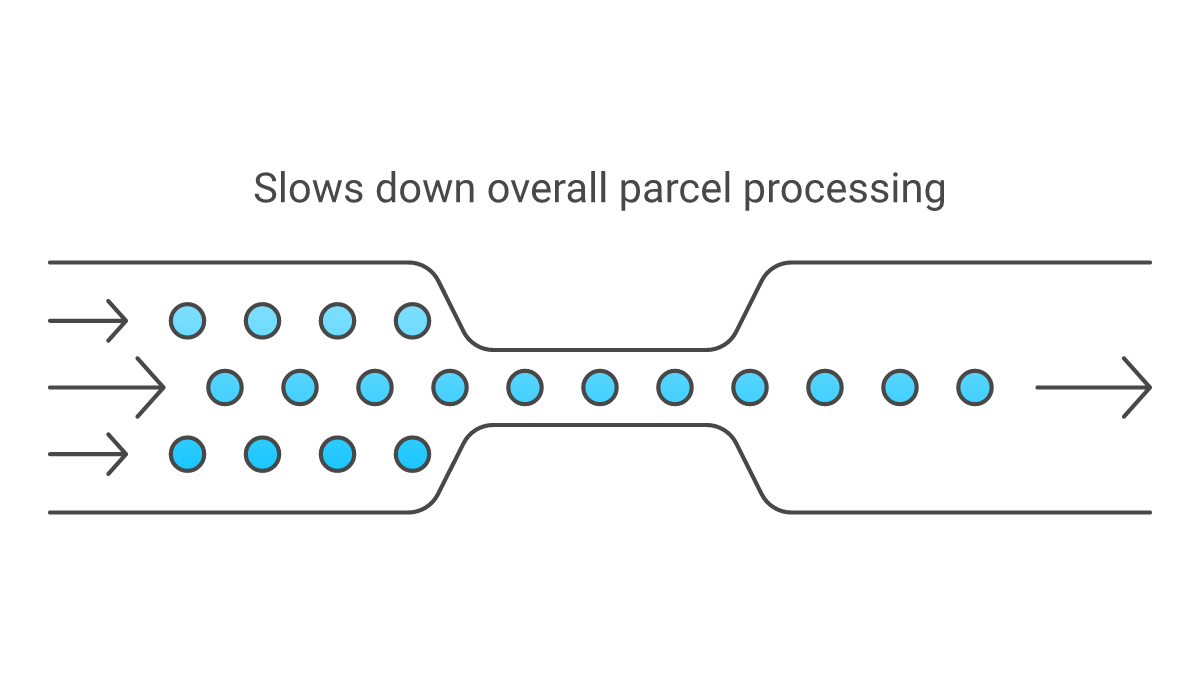
The spike in labor efficiency is remarkable. Automated sites tally a 60% slash in labor needs related to sorting, even as throughput rockets by 200-300%. This kind of efficiency translates to labor savings of $2.5-$3.5 million annually for mid-sized facilities processing 50,000 to 75,000 parcels each day.
When it comes to quality, the numbers don’t lie. Error rates plummet to less than 0.1% in automated centers, a stark contrast to the 2-3% typical of manual operations. This improvement boosts customer satisfaction while slashing costly error-related processes.
Space utilization has seen a revamp, too. Modern automated sorting systems use space 30% more efficiently than their old conveyor-based cousins while maintaining better throughput. This is especially beneficial in urban environments where real estate isn’t cheap.
Another significant improvement lies in energy use. The latest sorts of automated systems slash energy consumption by 40% per parcel compared to previous technologies, helping with both cost-cutting and sustainability targets.
Cost-Benefit Analysis
The investment in automated sorting systems varies widely depending on the scale and complexity of the setup. Current data shows medium-sized facilities need to shell out $8-12 million for full-scale automation, whereas bigger setups can expect to spend $15-25 million.
ROI calculations should account for much more than just labor savings. Industry reports suggest automated setups also save money by cutting down on error handling, lowering insurance costs, and reducing workers’ compensation claims. These secondary savings can contribute up to 20-30% of total ROI.
Maintenance for these automated systems costs around 3-5% of the initial investment every year, whereas traditional mechanical systems require 8-10%. This difference adds up to significant long-term savings.
Implementation Strategies and Best Practices
The blueprint for successful automation is grounded in real-world examples from the industry. Top logistics providers stress the importance of phased deployment, allowing for learning and system tweaking along the way.

The initial phases of automation usually target high-volume, standardized parcels, where immediate gains are most evident. Data from implementations in 2026 shows these initial steps often secure 40-50% of the project’s total benefits, though they cost only about 30% of the overall investment.
Effective change management is a cornerstone for success. Firms that put 15-20% of their budget into training and workforce development hit full productivity 30% faster than those focusing solely on technical deployment.
Seamless system integration is vital for maximizing automation returns. Facilities that merge automated sorting with their warehouse and transportation management systems report overall efficiency boosts of up to 25%.
Building data analytics capabilities alongside physical automation is a must. Companies that invest in advanced analytics see their system’s optimization improve by 35%, along with more effective predictive maintenance practices.
Future Trends and Innovation Pathways
The horizon for automation is full of promise, with several key trends paving the path forward. AI and machine learning are elevating sorting decisions to new heights, with the next-gen systems optimizing operations in real-time based on downstream needs and delivery demands.
Robotics is bound for more adaptability and flexibility. New developments include robots that can handle odd-shaped and delicate packages with the dexterity one might expect from a human, broadening the spectrum of automation’s reach.
Cloud-based control systems are on the rise, promising better scalability and the ability to manage remotely. Early adopters note a 20% cut in IT costs and 40% quicker system updates.
Competitive Landscape and Market Dynamics
The marketplace for parcel sorting automation is undergoing a transformation, with long-standing equipment manufacturers being challenged by tech-centric newcomers. Analyses reveal an upswing in consolidation, with the top five vendors now holding 65% of the global market.
Being technologically distinct has become a crucial edge. Companies offering integrated AI and analytics features enjoy a 15-20% price premium compared to standard equipment suppliers. This reflects the rising value assigned to software and system optimization features.
Regional market characteristics provide intriguing contrasts. While North American and European markets vie for advanced automation features, emerging markets lean towards scalable, modular solutions that can grow alongside their business volumes.
Service and support stand out as essential differentiators. Companies that offer comprehensive maintenance and optimization services boast customer retention rates 30% higher and have 40% more repeat business.
The innovation cycle is quicker than ever, with new tech releases every 12-18 months versus the prior 3-4-year rhythm. This means logistics managers must develop agile strategies for technology adoption.
Risk Management and Mitigation
Identifying and managing risks is crucial when implementing automation. Industry research points to system integration as the most significant risk, responsible for 40% of project delays and cost blowouts.
Security concerns rise as systems grow more connected. Leading providers now allocate 8-10% of their budgets to cybersecurity, underlining the critical role of sorting operations.
Resistance to change can derail projects. Organizations that launch comprehensive change management programs face 50% fewer issues and achieve higher adoption rates in the long run.
Strategic Recommendations for Distribution Center Automation
For logistics firms pondering automation investments, several vital recommendations emerge from the market analysis. First, a detailed evaluation of current operations and a clear definition of automation goals are vital for success.
Phased rollouts yield the best results, providing a chance to build expertise and fine-tune strategies based on real-world insights. This typically cuts implementation risk by 40-50% compared to all-at-once deployments.
Parallel investments in workforce development are essential. Companies that spend 20% of their budget on training and skill building see 35% better long-term success.
Vendor selection should go beyond technical specs. Considerations should include industry expertise, the vendors’ support infrastructure, and financial robustness. Leaders use weighted scoring systems that balance these aspects with traditional price and performance measures.
Routine performance assessment and optimization programs are critical for staying ahead. Companies with formal optimization initiatives attain 25-30% more long-term success compared to those only focused on initial implementation.
Future Outlook and Strategic Implications
Looking towards 2027-2028, several trends will shape automation’s evolution. Artificial intelligence will deepen its role, with AI-driven optimization becoming the norm in top-tier operations. Forecasts suggest these systems will yield an extra 20-25% in efficiency gains.
Automation’s integration with entire supply chains will speed up. Industry leaders are crafting strategies for full-spectrum automation from reception to delivery, promising a 15-20% uplift in efficiency.
Sustainability will become a stronger factor in automation decisions. The next wave of systems is expected to bring 30-40% better energy efficiency, supporting environmental goals.
Conclusion
In 2026, the parcel sorting automation sector finds itself at a pivotal juncture. With technology advancing at a brisk pace and competition stiffening, automation is now a strategic necessity rather than a mere option.
Thriving in this environment demands a keen focus on both technical and organizational elements. Companies that view automation as a full-scale transformation rather than just a technical upgrade consistently outperform.
As we cast our eyes forward, the innovation in parcel sorting systems is far from slowing down. Companies need to continuously gauge and embrace new tech while ensuring operational integrity. Those that manage to do this will be well-positioned to seize the opportunities that lie ahead in the ever-evolving logistics industry.