Route Optimization Software: Shaping the Future of Logistics with Smart Technology

Route Optimization Software: Shaping the Future of Logistics with Smart Technology

The global market for route optimization software is set for a major leap, heading towards $42.65 billion by 2035 from $10.99 billion in 2025 . This surge reflects a deeper shift in logistics, delivery, and fleet management practices. As supply chains become more intricate and customer demands rise, employing route optimization technology isn’t just beneficial—it’s essential for gaining the upper hand.

This technology’s impact reaches well beyond basic navigation. By 2026, companies using advanced route optimization tools report slashing costs by 24% in last-mile delivery and boosting on-time delivery by 35%. The promise of better efficiency coupled with enhanced service quality is the main driver behind the market’s expansion, growing at a solid 14.2% CAGR.

This in-depth look at route optimization software will uncover how it’s transforming logistics, featuring key market trends, implementation tactics, and real-world success stories. From AI integration to real-time dynamic routing, we’ll highlight the cutting-edge technologies setting new efficiency benchmarks in logistics.

Whether you’re steering a small delivery fleet or managing intricate supply chain operations, grasping the power of route optimization software is vital for staying competitive in today’s fast-paced logistics environment.

Market Evolution and Current Trends in Logistics Routing

Since its early days, the route optimization software market has transformed. In North America, which controls about 33% of the global market in 2024, the robust tech infrastructure and numerous software vendors lead the charge. This regional dominance offers valuable insights into emerging trends and adoption globally.

Fleet Management applications hold the largest portion of the market, making up 42% of software deployments. This reflects how sophisticated these tools have become, offering not just routing, but vehicle tracking, driver behavior insights, fuel usage, and maintenance planning, turning simple routing tools into full-fledged logistics platforms.

The market’s growth owes much to concurrent trends. E-commerce is on a relentless rise, with online sales globally predicted to hit $8.1 trillion by 2026. As businesses handle more deliveries, the need for smart routing solutions to maintain efficiency and service quality becomes paramount.

Tech advancements are pivotal in this evolution. Integrating AI and machine learning has turned route planning from static maps to dynamic, real-time systems adapting on the fly. Industry insights suggest AI-powered routing can beat traditional methods by 15-20% in efficiency.

Environmental factors are becoming crucial market drivers. With transport producing roughly 29% of global CO2 emissions, more companies are turning to route optimization to support their environmental goals. Cutting-edge software can cut fuel use by up to 25%, yielding significant green benefits.

Key Features and Capabilities

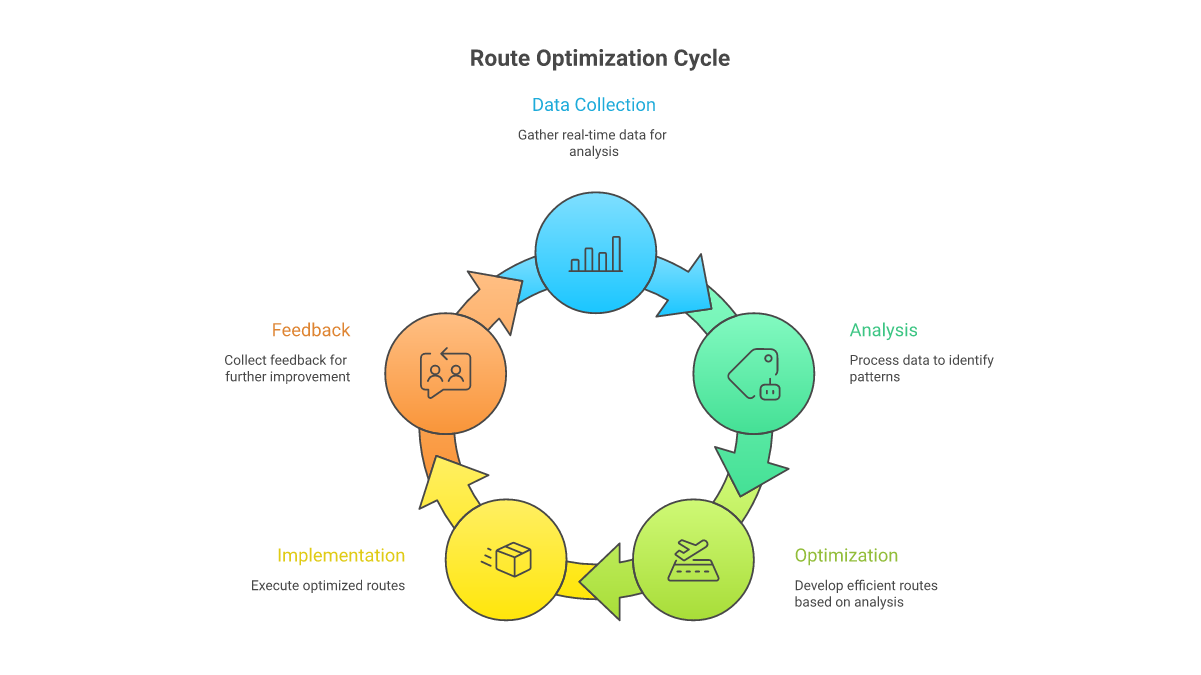
Today’s route optimization software goes beyond mere navigation. At its heart are complex algorithms balancing multiple factors to decide the best routes. With hundreds, sometimes thousands, of delivery points, manual calculations just don’t cut it.
Core Features and Capabilities - route optimization software visualization
Core Features and Capabilities

Real-time traffic data integration is crucial, enabling systems to adjust routes instantaneously based on live updates. This feature can shorten delivery times by 12-18% over traditional routing methods, an advantage especially vital in bustling cities.

Optimizing vehicle capacity now includes intricate loading strategies, considering weight, volume, and even delivery order. Such advanced systems can enhance vehicle usage by up to 35%, helping to minimize the number of vehicles needed.

Driver management features have advanced, accounting for work hour regulations, breaks, and even driver expertise. Automatically assigning routes based on driver skills and area knowledge boosts quality and satisfaction.

Modern solutions offer seamless integration with other business systems, thanks to APIs and pre-built links to ERP and warehouse systems. This connectivity ensures smooth data flow and real-time oversight of the whole supply chain.

Implementing Strategies and Best Practices

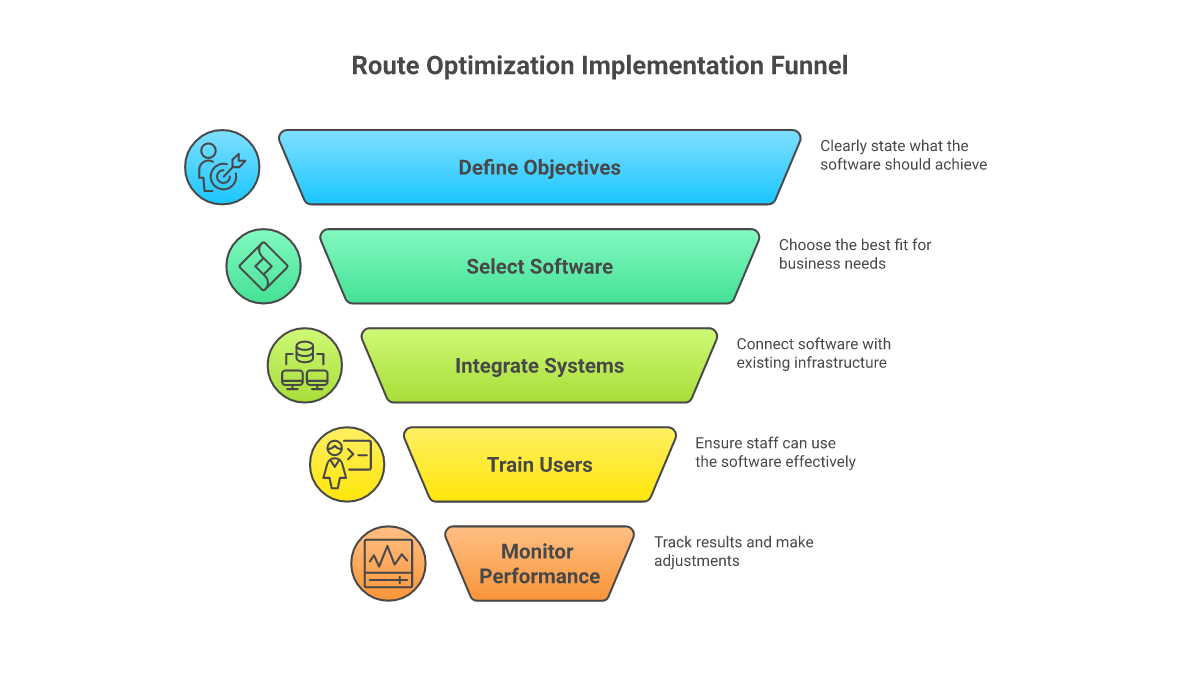
Successfully implementing route optimization software requires a well-planned approach that goes beyond just installing new tools. Research shows that companies adopting a comprehensive strategy achieve returns on investment 40% quicker than those with a piecemeal approach. Start with a full assessment of current operations and clear objectives.
Implementation Strategies and Best Practices - route optimization software visualization
Implementation Strategies and Best Practices

Data quality is essential in these projects. Companies must ensure they have reliable data on delivery spots, vehicle specs, and operational parameters. Studies reveal that poor data can slash routing efficiency by 30%, showing how vital accurate data is.

Change management is another key to success. Driver acceptance, especially, can make or break an implementation. Invest in training programs that boost user adoption rates by 25%, helping achieve full benefits 60% sooner than those who overlook this step.

Integrating with existing systems needs careful planning and staggered execution, often starting with core functions and adding complexity over time. This gradual method builds expertise while minimizing disruption.

Performance monitoring is crucial from day one. Top companies use KPIs to measure both tech performance (like route efficiency) and business results (like customer satisfaction). This helps sustain improvement and maximize value over time.

Emerging Technologies and Future Trends in Route Planning

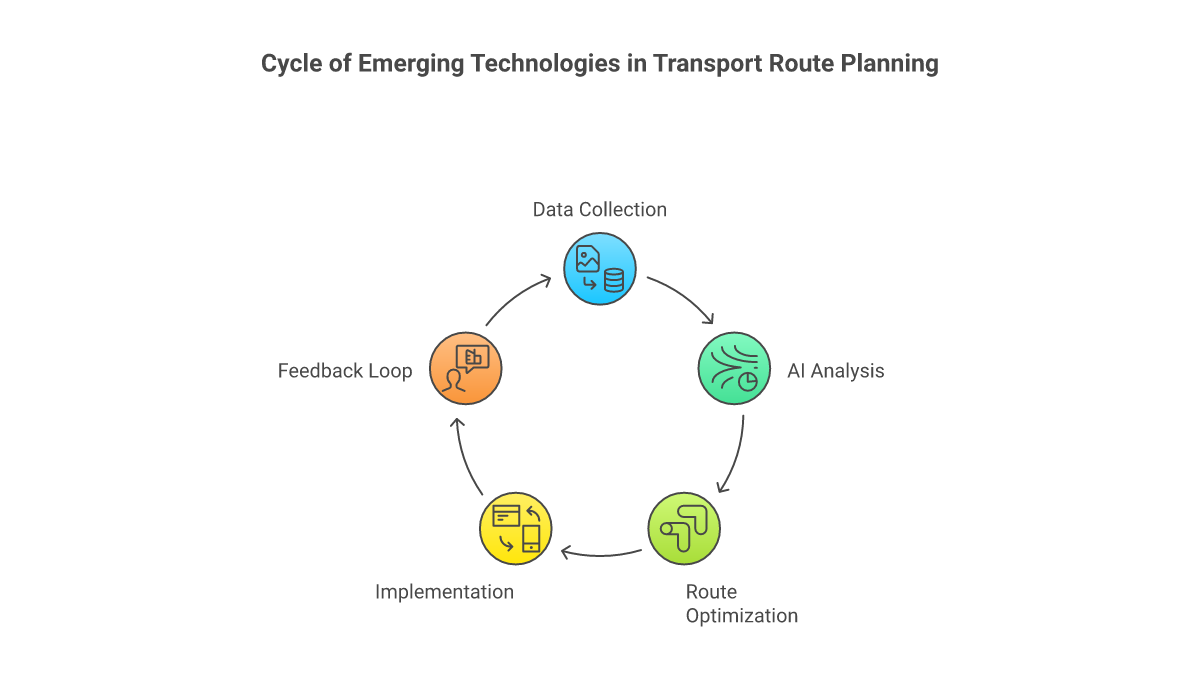
AI and Machine Learning are at the forefront of route optimization. These systems analyze vast data to forecast traffic, timing, and disruptions with great precision. AI-enhanced tools can improve delivery accuracy by 40% over traditional setups.
Emerging Technologies and Future Trends in Transport Route Planning - route optimization software visualization
Emerging Technologies and Future Trends in Transport Route Planning

The Internet of Things is shaking up route optimization with real-time tracking of vehicles and goods. IoT devices provide continuous updates on location and condition, refining routing and maintenance strategies. Predictions say 85% of commercial vehicles will be IoT-enabled by 2026.

Autonomous vehicles are the next frontier, with route optimization tools adapting for these self-driving deliveries. These systems factor in charging stations, autonomous navigation, and integration with smart city frameworks.

Predictive analytics capabilities are advancing, allowing systems to foresee and adjust for disruptions before they happen. This proactive stance can cut delivery delays by 30% and boost customer satisfaction by 25%.

Sustainability features are gaining traction, letting companies measure carbon footprints and optimize for environmental impact. These tools align operational performance with corporate green goals.

Assessing Success and ROI

Calculating the ROI of route optimization software involves various elements. While slashed fuel costs, often 15-30%, are the most obvious benefit, a full analysis should consider broader gains and indirect perks.

Labor efficiency gains often eclipse fuel savings financially. Companies using advanced optimization solutions report slashing labor costs by 20-25% through better planning and fewer overtime demands, boosting the bottom line and worker satisfaction.

Customer satisfaction often improves markedly. On-time deliveries rise by 25-35%, and hitting delivery windows can improve by 40%. These enhancements boost retention and new business.

Vehicle use and upkeep costs are also reduced. Firms often cut fleet sizes by 15-20% thanks to enhanced routing, with maintenance costs dropping 25% thanks to proactive scheduling.

Reducing environmental impacts is increasingly valued in ROI. Companies report 20-30% lower CO2 emissions thanks to less mileage and better vehicle use, showing it’s possible to be green and efficient.

Successful Case Studies

Leading firms have shown striking results with smart route optimization adoption. DHL’s AI-driven optimization in Europe cut fleet miles by 15% and boosted on-time performance by 27%. Its knack for processing real-time traffic and delivery patterns proved invaluable, especially in urban areas.

Regional carriers also see big wins. A delivery company in the Pacific Northwest saw fuel costs fall by 32% within six months after implementing advanced optimization, thanks to better multi-stop route planning and workload balancing.

Retail giants like Walmart are using route optimization to thrive in the same-day delivery race. By adopting dynamic routing, Walmart expanded their same-day services while trimming delivery costs by 23%, with seamless integration to inventory and order systems being key.

Small businesses benefit as well. A local food delivery service cut delivery times by 35% and expanded their reach by 40% using a cloud-based optimization tool, ideal for their growing needs.

Municipal services benefit too. A European city’s waste collection project cut fuel use by 28%, improving reliability, with the system adept at managing complex schedules and constraints.

Conclusion and Looking Ahead

The route optimization software sector is where tech innovation meets operational need. With projections showing it hitting $42.65 billion by 2035, efficient route optimization is a must for competitive logistics.

To succeed, firms must combine technological savvy with practical strategies, focusing on data quality, adapting to change, and striving for improvement. The payoff includes cost cuts, better service, and notable environmental benefits.

In the future, integrating AI, IoT, and autonomous tech will bring even more sophisticated routing. Firms investing in this tech now are poised to excel amidst these trends, maintaining their edge in a complex logistics scene.

Strategic Operational Transformation through Parcel Sorting Automation: A Comprehensive Analysis

Strategic Operational Transformation through Parcel Sorting Automation: A Comprehensive Analysis

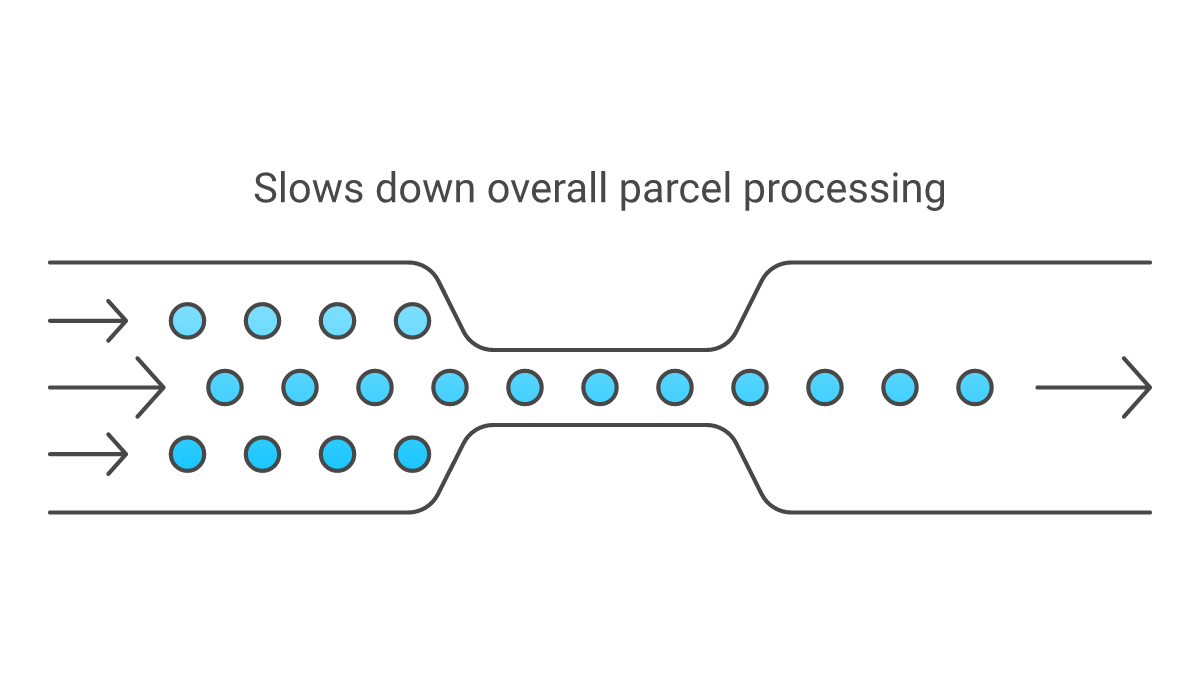
Fast forward to 2026, and you’ll find the global parcel sorting automation market at a significant $3.14 billion milestone. With forecasts predicting a climb to $4.19 billion by 2027, there’s more beneath these figures than meets the eye. Automation is doing more than just tweaking the logistics of parcel handling; it’s reshaping its very economics. For logistics companies grappling with 20-30% annual volume surges and facing 15% upticks in labor costs, automation has shifted from being a competitive edge to becoming a crucial necessity.

Understanding the importance of this transformation means diving into current market dynamics. Recent analyses show that warehouse operations now constitute 59.55% of logistics automation revenue , buoyed by the spike in goods-to-person systems and robotic sortation. This transition underscores a deeper shift in logistics thinking – from merely seeking incremental efficiency to architecting a complete operational overhaul.

In this analysis, we’ll take a close look at how top logistics players use parcel sorting automation to carve 25-30% off labor costs and speed up order fulfillment by threefold. Moreover, we’ll delve into the strategic stakes these technologies hold for maintaining a competitive edge in a market that demands more each day.

Exploring the nuances of parcel sorting automation, we’ll see how the application of AI, robotics, and advanced analytics is pioneering new operational benchmarks, changing the game in terms of speed, precision, and scalability demands.

Current Market Landscape and Growth Drivers

How is the parcel sorting automation market shaping up in 2026? Primary studies point out that investments in warehouse automation are yielding historic returns, with automated facilities showing 40% superior throughput over traditional methods. This gap is fueling a swift uptake across the industry.

Current Market Landscape and Growth Drivers - parcel sorting automation visualization
Current Market Landscape and Growth Drivers

The unstoppable growth of e-commerce stands as the prime driver, with global parcel volumes hitting 217 billion in 2025 and expected to surge past 240 billion by the next year. This avalanche of volume is maxing out the capabilities of traditional sorting operations, where maintaining accuracy above 95% becomes a daunting task.

Insights from the market reveal that those embracing full-scale automated parcel sorting achieve a 99.9% accuracy rate, cutting per-parcel handling costs by 35-40%. Such figures have caught the executive spotlight, pushing an accelerated automation adoption across the board.

The labor market paints a compelling picture for the automation imperative. With warehouse labor expenses climbing by 15% annually in key areas, the ROI for automation looks more enticing than ever. It’s reported that automated sorting systems usually pay for themselves in 24-36 months, with some busy operations breaking even in just a year and a half.

Take a look at how regional variances paint further clarity. North America takes the lead with an 80% market presence in advanced automation solutions, while Asia-Pacific regions show the quickest growth, with annual investments rising by 13.6%.

Technology Integration and Innovation in Parcel Handling Systems

Parcel sorting technology has grown leaps and bounds, with AI and machine learning at the forefront of system honing. Recent upgrades show AI-powered systems manage 100,000 parcels an hour, tripling the output of older versions.

The rise of computer vision and robotics has become a game of differentiation in today’s sorting centers. Cutting-edge vision systems identify and sort packages with a breathtaking 99.99% precision, even when handling the most diverse items and packaging styles. This has become invaluable for e-commerce operations awash with varied product types.

IoT sensors and real-time analytics integration have made predictive maintenance and adaptive system refinement possible. Leading centers report slashing downtime by 30% and boosting overall equipment efficiency by a quarter through these technologies.

Operational Impact and Performance Metrics

The advantages of automated parcel sorting aren’t confined to throughput gains alone. Research conducted in 2026 highlights transformative improvements across several performance metrics for facilities rolling out comprehensive automation solutions.

Operational Impact and Performance Metrics - parcel sorting automation visualization
Operational Impact and Performance Metrics

The spike in labor efficiency is remarkable. Automated sites tally a 60% slash in labor needs related to sorting, even as throughput rockets by 200-300%. This kind of efficiency translates to labor savings of $2.5-$3.5 million annually for mid-sized facilities processing 50,000 to 75,000 parcels each day.

When it comes to quality, the numbers don’t lie. Error rates plummet to less than 0.1% in automated centers, a stark contrast to the 2-3% typical of manual operations. This improvement boosts customer satisfaction while slashing costly error-related processes.

Space utilization has seen a revamp, too. Modern automated sorting systems use space 30% more efficiently than their old conveyor-based cousins while maintaining better throughput. This is especially beneficial in urban environments where real estate isn’t cheap.

Another significant improvement lies in energy use. The latest sorts of automated systems slash energy consumption by 40% per parcel compared to previous technologies, helping with both cost-cutting and sustainability targets.

Cost-Benefit Analysis

The investment in automated sorting systems varies widely depending on the scale and complexity of the setup. Current data shows medium-sized facilities need to shell out $8-12 million for full-scale automation, whereas bigger setups can expect to spend $15-25 million.

ROI calculations should account for much more than just labor savings. Industry reports suggest automated setups also save money by cutting down on error handling, lowering insurance costs, and reducing workers’ compensation claims. These secondary savings can contribute up to 20-30% of total ROI.

Maintenance for these automated systems costs around 3-5% of the initial investment every year, whereas traditional mechanical systems require 8-10%. This difference adds up to significant long-term savings.

Implementation Strategies and Best Practices

The blueprint for successful automation is grounded in real-world examples from the industry. Top logistics providers stress the importance of phased deployment, allowing for learning and system tweaking along the way.

Implementation Strategies and Best Practices - parcel sorting automation visualization
Implementation Strategies and Best Practices

The initial phases of automation usually target high-volume, standardized parcels, where immediate gains are most evident. Data from implementations in 2026 shows these initial steps often secure 40-50% of the project’s total benefits, though they cost only about 30% of the overall investment.

Effective change management is a cornerstone for success. Firms that put 15-20% of their budget into training and workforce development hit full productivity 30% faster than those focusing solely on technical deployment.

Seamless system integration is vital for maximizing automation returns. Facilities that merge automated sorting with their warehouse and transportation management systems report overall efficiency boosts of up to 25%.

Building data analytics capabilities alongside physical automation is a must. Companies that invest in advanced analytics see their system’s optimization improve by 35%, along with more effective predictive maintenance practices.

Future Trends and Innovation Pathways

The horizon for automation is full of promise, with several key trends paving the path forward. AI and machine learning are elevating sorting decisions to new heights, with the next-gen systems optimizing operations in real-time based on downstream needs and delivery demands.

Robotics is bound for more adaptability and flexibility. New developments include robots that can handle odd-shaped and delicate packages with the dexterity one might expect from a human, broadening the spectrum of automation’s reach.

Cloud-based control systems are on the rise, promising better scalability and the ability to manage remotely. Early adopters note a 20% cut in IT costs and 40% quicker system updates.

Competitive Landscape and Market Dynamics

The marketplace for parcel sorting automation is undergoing a transformation, with long-standing equipment manufacturers being challenged by tech-centric newcomers. Analyses reveal an upswing in consolidation, with the top five vendors now holding 65% of the global market.

Being technologically distinct has become a crucial edge. Companies offering integrated AI and analytics features enjoy a 15-20% price premium compared to standard equipment suppliers. This reflects the rising value assigned to software and system optimization features.

Regional market characteristics provide intriguing contrasts. While North American and European markets vie for advanced automation features, emerging markets lean towards scalable, modular solutions that can grow alongside their business volumes.

Service and support stand out as essential differentiators. Companies that offer comprehensive maintenance and optimization services boast customer retention rates 30% higher and have 40% more repeat business.

The innovation cycle is quicker than ever, with new tech releases every 12-18 months versus the prior 3-4-year rhythm. This means logistics managers must develop agile strategies for technology adoption.

Risk Management and Mitigation

Identifying and managing risks is crucial when implementing automation. Industry research points to system integration as the most significant risk, responsible for 40% of project delays and cost blowouts.

Security concerns rise as systems grow more connected. Leading providers now allocate 8-10% of their budgets to cybersecurity, underlining the critical role of sorting operations.

Resistance to change can derail projects. Organizations that launch comprehensive change management programs face 50% fewer issues and achieve higher adoption rates in the long run.

Strategic Recommendations for Distribution Center Automation

For logistics firms pondering automation investments, several vital recommendations emerge from the market analysis. First, a detailed evaluation of current operations and a clear definition of automation goals are vital for success.

Phased rollouts yield the best results, providing a chance to build expertise and fine-tune strategies based on real-world insights. This typically cuts implementation risk by 40-50% compared to all-at-once deployments.

Parallel investments in workforce development are essential. Companies that spend 20% of their budget on training and skill building see 35% better long-term success.

Vendor selection should go beyond technical specs. Considerations should include industry expertise, the vendors’ support infrastructure, and financial robustness. Leaders use weighted scoring systems that balance these aspects with traditional price and performance measures.

Routine performance assessment and optimization programs are critical for staying ahead. Companies with formal optimization initiatives attain 25-30% more long-term success compared to those only focused on initial implementation.

Future Outlook and Strategic Implications

Looking towards 2027-2028, several trends will shape automation’s evolution. Artificial intelligence will deepen its role, with AI-driven optimization becoming the norm in top-tier operations. Forecasts suggest these systems will yield an extra 20-25% in efficiency gains.

Automation’s integration with entire supply chains will speed up. Industry leaders are crafting strategies for full-spectrum automation from reception to delivery, promising a 15-20% uplift in efficiency.

Sustainability will become a stronger factor in automation decisions. The next wave of systems is expected to bring 30-40% better energy efficiency, supporting environmental goals.

Conclusion

In 2026, the parcel sorting automation sector finds itself at a pivotal juncture. With technology advancing at a brisk pace and competition stiffening, automation is now a strategic necessity rather than a mere option.

Thriving in this environment demands a keen focus on both technical and organizational elements. Companies that view automation as a full-scale transformation rather than just a technical upgrade consistently outperform.

As we cast our eyes forward, the innovation in parcel sorting systems is far from slowing down. Companies need to continuously gauge and embrace new tech while ensuring operational integrity. Those that manage to do this will be well-positioned to seize the opportunities that lie ahead in the ever-evolving logistics industry.

The Evolution of Warehouse Listing Marketplaces in Slovakia: A Comprehensive Guide for Skladové priestory prenájom

The Evolution of Warehouse Listing Marketplaces in Slovakia: A Comprehensive Guide for Skladové priestory prenájom

By 2025, Slovakia’s industrial real estate landscape experienced a significant breakthrough, achieving an impressive €970 million in investment volume. This remarkable figure, documented in the report , marks the second highest on record. It’s not just about the increased volume of transactions, but about how businesses are now finding, assessing, and securing these warehouse spaces.

The timing could not have been better. As the total modern warehouse and production space in Slovakia surpassed an incredible 4.83 million square meters by Q4 2025, the old ways of finding and securing industrial space just don’t cut it anymore. The increasing complexity of the market, coupled with the rising expectations of tenants, demands more advanced tools for discovery and comparison.

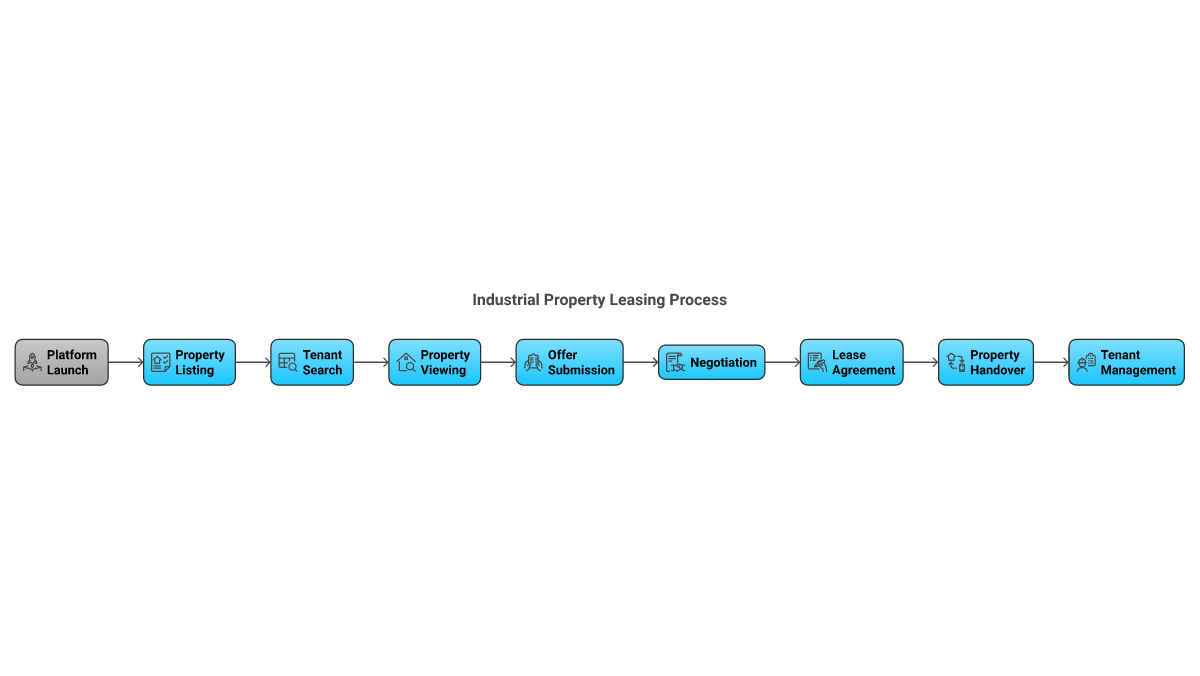
This analysis dives into how digital marketplace aggregation is reshaping the leasing of warehouses in Slovakia. It examines the technological leaps, market shifts, and strategic consequences for everyone involved in the industrial real estate sector. From AI-driven algorithms that match properties to virtual tours offering immersive experiences, we’ll explore the tools and strategies that are carving out the future of industrial space procurement.

For logistics operators eyeing expansion, industrial property owners aiming to maximize occupancy, or real estate pros trying to keep up with this changing sector, understanding these marketplace dynamics is key to thriving in 2026 and beyond.

Current Market Dynamics and Digital Transformation in Warehouse Space

Slovakia’s industrial real estate market stands at an intriguing crossroad. CBRE’s latest analysis for Q1 2025 revealed a shift in market power, with vacancy rates climbing to 8.2% in key logistics hubs. This scenario fosters the perfect climate for digital innovation, as both property owners and tenants search for more efficient ways to connect.

The traditional routes for finding warehouse space, usually dependent on broker networks and direct deals, made up only 52% of new leases in 2025, dropping from 78% in 2022. This sharp decline signals the market’s technological transformation, with online platforms facilitating a staggering €425 million in lease transactions that year.

The rise in digital platform use aligns with the boom in Slovakia’s logistics sector. By 2026, the national freight and logistics market is projected to grow from USD 9.06 billion to USD 9.29 billion, fueling a steady demand for skladové priestory prenájom (warehouse space rental). This growth has drawn hefty investments in digital infrastructure, with platforms securing €67 million in venture capital funding throughout 2025.

What stands out is the regional uptake of these digital platforms. Western Slovakia, historically a logistics stronghold, leads with 63% of listings now found online. Meanwhile, central and eastern regions show increasing adoption rates of 48% and 41%, underscoring the nationwide breadth of this transformation.

The impact isn’t just in finding space. Today’s digital marketplaces offer layered data analytics, giving insights into trends, pricing, and occupancy. This transparency is a game-changer, with 72% of tenants in 2025 saying that digital platform data heavily influenced their location decisions.

Key Features and Technological Integration in Industrial Property Leasing

The landscape of warehouse marketplace platforms in Slovakia has dramatically advanced beyond simple listings. These platforms have transformed into comprehensive ecosystems, thanks largely to technological integration. At the forefront is artificial intelligence, which powers algorithms that pair tenants with the right spaces with 85% accuracy—leagues better than the 45% accuracy of older methods.

Key Features and Technological Integration in Industrial Property Leasing - skladové priestory prenájom visualization
Key Features and Technological Integration in Industrial Property Leasing

Virtual reality tours have become a standout feature, with 64% of initial property viewings now happening virtually. This advancement has cut the average lease completion time by 37% and slashed the need for physical tours by 58%. Properties with virtual tours have seen interest levels more than double compared to those with just pictures.

Data integration within these platforms has reached new heights. Real-time monitoring across Slovakia’s logistics corridors provides tenants with unparalleled market transparency. Tenants can now track daily rate changes across 122 micro-markets, helping them time their lease negotiations perfectly.

Adding another layer of functionality, building management system (BMS) data integration now allows for insights into a property’s past utility use, maintenance history, and operating costs. Such transparency has slashed post-lease disputes by 42%, according to studies conducted in 2025.

Automation in document processing and digital management of transactions has further streamlined leasing. The period from initial inquiry to lease signing fell from an average of 76 days in 2024 to a mere 31 days in 2025 for those using digital platforms.

Market Impact and Efficiency Gains

Warehouse marketplace platforms have reshaped Slovakia’s industrial property market dynamics at every level. Average transaction costs have dropped by 23%, as digital platforms eliminated many traditional fees from intermediaries. This efficiency translated into €34 million in direct tenant savings throughout 2025.

Vacancy periods underwent notable improvements, dipping from an average of 4.2 months in 2024 to just 2.8 months in 2025 for listings on digital platforms. This efficiency not only benefits tenants but also added an estimated €78 million to landlords’ revenue due to shorter vacancy times.

Real-time pricing data now covers 83% of Slovakia’s industrial real estate, contributing to more transparent markets. This clarity has narrowed the bid-ask spread by 31% versus traditional systems, fostering more efficient negotiations and shorter deal closure times.

The improved liquidity in the market is particularly striking. Lease transaction times dropped by 42% in 2025, with a 156% rise in qualified leads per listing. This increased liquidity has brought in €187 million in new institutional investments, with market efficiency cited as the primary attraction.

Not to be overlooked, the move to digital platforms has brought an environmental bonus. The steep drop in physical site visits saved around 425,000 kilometers of travel in 2025, cutting 68 metric tons of CO2 emissions in the process.

Challenges and Future Developments

Despite the benefits, Slovakia’s digital lease transformation still faces hurdles. Data standardization is a major issue, with only 58% of listings in 2025 adhering to the Slovak Industrial Property Data Standard (SIPDS). This fragmentation hinders cross-platform comparisons and comprehensive market analysis.

Security concerns are also on the rise, as platforms handle more sensitive business data. The Slovak National Cyber Security Center recorded 17 attempted breaches of real estate platforms in 2025, underscoring the urgent need for strong security measures.

Bridging the gap with legacy systems presents its own challenges. While 72% of new properties can easily sync with digital platforms, older facilities often lack digital capabilities, requiring costly retrofitting at about €4.2 per square meter.

The human touch remains essential, with 65% of deals needing significant offline interaction despite being initiated digitally. This hybrid approach requires a balance between automation and personal service, a challenge digital platforms are addressing with AI-driven customer support.

Looking forward, emerging technologies are set to transform the marketplace further. Blockchain-based smart contracts are under trial by three major platforms, potentially slashing transaction times by another 40%. Meanwhile, augmented reality is expected to revolutionize virtual property tours by 2027.

Best Practices for Logistics Real Estate Market Participants

Adapting to Slovakia’s evolving warehouse marketplace requires strategic finesse from all stakeholders. Property owners investing in digital upgrades experienced 27% more inquiries in 2025 than those sticking to traditional listings, leading to 18% faster lease signings and 12% higher rental rates.

Best Practices for Logistics Real Estate Market Participants - skladové priestory prenájom visualization
Best Practices for Logistics Real Estate Market Participants

Data quality has emerged as a critical factor for success. Properties with comprehensive digital documentation, like BIM models and detailed specs, garnered 3.2 times more inquiries than those with basic listings. The ROI on creating detailed digital assets averaged an impressive 312% in 2025.

Integrating with enterprise resource planning (ERP) systems is becoming crucial. Companies that linked their logistics planning software directly to marketplace platforms shortened their space procurement cycles by 52%, leading to average annual savings of €2.3 million for large operators.

Regularly monitoring the market through digital platforms has become essential for staying competitive. Companies using automated intelligence tools identified favorable lease opportunities 45 days sooner than those relying solely on traditional research.

Developing in-house digital expertise is key, with 78% of successful market players in 2025 having dedicated teams or specialists for digital real estate efforts.

Conclusion and Future Outlook

The transformation of Slovakia’s warehouse marketplace scene marks a pivotal shift in industrial real estate operations. With €970 million in investments and digital platforms accounting for 48% of transactions in 2025, the push towards digital-first strategies seems unstoppable.

Conclusion and Future Outlook - skladové priestory prenájom visualization
Conclusion and Future Outlook

For those in the market, the message is clear: embrace digital transformation or face falling behind. Data shows that early adopters of full digital strategies secured 23% better terms on average in 2025 compared to traditional players. As technology progresses and market expectations evolve, this advantage is likely to grow.

As we look to 2027 and beyond, incorporating artificial intelligence, blockchain, and augmented reality may further reshape how skladové priestory prenájom (warehouse space rental) is managed in Slovakia’s commercial property market. Companies investing in digital capabilities now will be best positioned to seize future opportunities in this dynamic industry.

Logistics Trends 2025: Transforming Supply Chains Through Digital Innovation and Sustainability

Logistics Trends 2025: Transforming Supply Chains Through Digital Innovation and Sustainability

By 2025, the global logistics market is set to hit $12.8 trillion , marking a pivotal moment in the evolution of supply chains. But beneath the surface of this astounding figure is a more compelling narrative: companies embracing digital transformation have reported 23% higher operational efficiency than those lagging behind. This striking difference not only indicates market growth but suggests a fundamental rethinking of how goods flow across the global economy.

The merging of artificial intelligence, automation, and sustainability initiatives is presenting unique opportunities and hurdles for logistics operators worldwide. As per DHL’s recent Logistics Trend Radar, 76% of companies are ramping up their tech investments to stay ahead, while 82% have named sustainability as a top strategic priority. This dual focus on innovation and environmental responsibility is reshaping everything from warehouse operations to the last-mile delivery process.

In this in-depth analysis, we’ll explore how cutting-edge technologies, shifting consumer expectations, and environmental demands are revolutionizing logistics operations. From AI-enhanced inventory management to eco-friendly fleet initiatives, we’ll examine the prominent logistics trends of 2025 that are set to shape success, providing practical insights for entities navigating this swiftly changing industry.

The stakes are high: McKinsey research shows that leaders in digital logistics adoption are cutting costs by 15-25% while boosting service levels by up to 30%. As we investigate each trend, we won’t just focus on the technologies but also delve into strategic implications and implementation challenges, identifying what will set market leaders apart in the coming years.

AI and Machine Learning: The New Logistics Intelligence

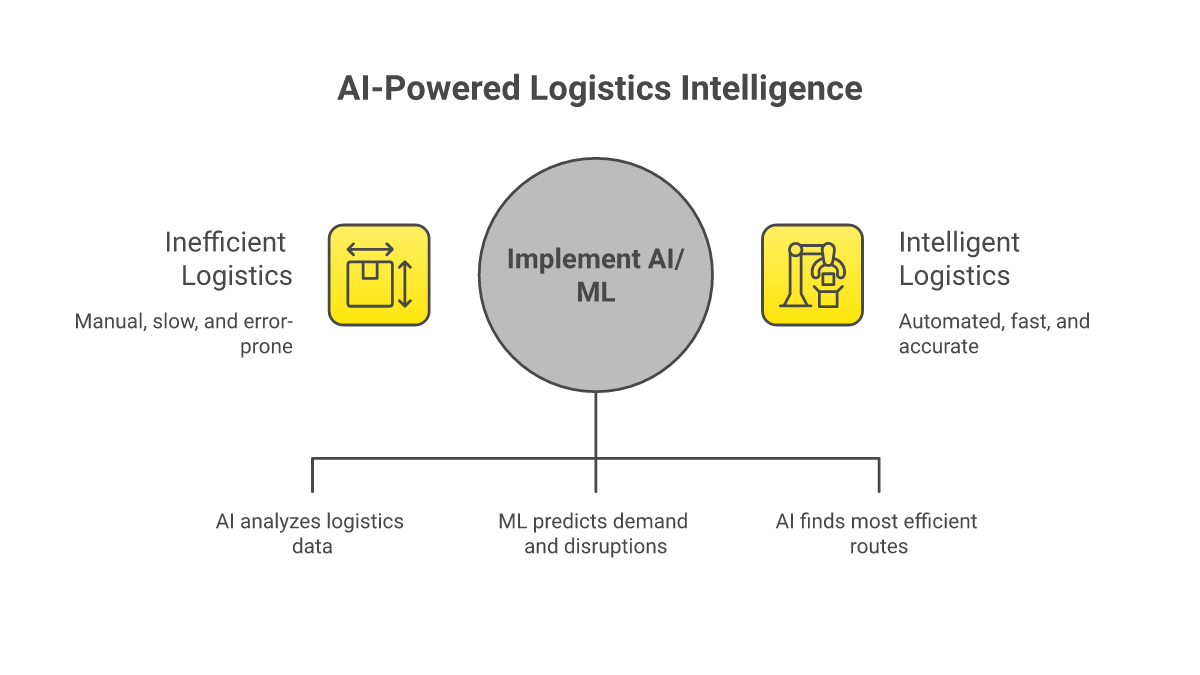
Artificial intelligence is the bedrock of logistics evolution heading into 2025, with expectations for the AI logistics market to spring to $14.3 billion globally. This marks a shift from AI being just a rising technology to an essential operational backbone. Gartner studies suggest that by 2025, 75% of large companies will have integrated AI into their supply chain operations, a significant rise from 32% in 2023.

AI and Machine Learning: The New Logistics Intelligence - logistics trends 2025 visualization
AI and Machine Learning: The New Logistics Intelligence

AI is making a major impact, especially in predictive analytics and demand forecasting. Top logistics firms report a 35-45% boost in forecast accuracy thanks to AI, leading to inventory cost cuts of 20-30%. Consider DHL’s use of AI-driven demand forecasting across Europe, processing over 200 variables in real-time—from weather trends to social media chatter—achieving 95% forecast accuracy, a 40% jump compared to traditional methods.

Route optimization is another key AI application with concrete results. UPS’s ORION system, fortified with machine learning in 2024, saves the company $400 million annually and cuts delivery vehicle emissions by 100,000 metric tons. The system manages 30,000 route optimizations per minute, factoring in traffic patterns and package sizes.

In warehouse operations, AI brings significant efficiencies through smart automation. Amazon’s latest AI-equipped fulfillment centers show a 65% increase in throughput over traditional setups while slashing picking errors by 75%. The system orchestrates hundreds of autonomous mobile robots (AMRs) in real-time, adapting to demand shifts in minutes, not hours.

AI’s predictive powers are also enhancing risk management and supply chain resilience. Munich Re’s 2024 report reveals that companies using AI for risk prediction see 42% fewer disruptions and recover 60% faster from incidents, a significant edge in an era of increasing supply chain volatility.

Automation and Robotics: Beyond Human Limitations in the Future of Logistics

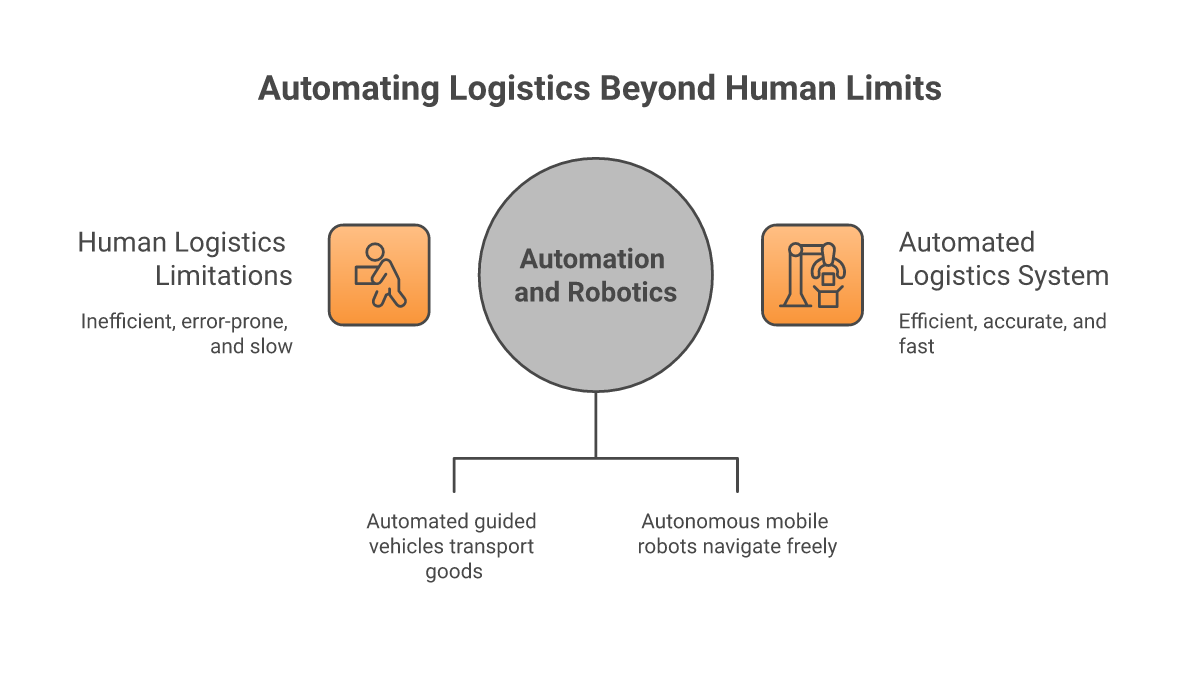
The warehouse automation market is estimated to hit $41 billion by 2025 , propelled by labor shortages and rising efficiency demands. The International Federation of Robotics reports a 63% rise in logistics robot installations in 2024, marking the fastest growth rate for industrial robot applications.

Automation and Robotics: Beyond Human Limitations in the Future of Logistics - logistics trends 2025 visualization
Automation and Robotics: Beyond Human Limitations in the Future of Logistics

Leading this shift are automated guided vehicles (AGVs) and autonomous mobile robots (AMRs), with worldwide deployments expected to exceed 500,000 units by 2025. Walmart’s recent AMR rollout across 25 distribution centers boosted throughput by 30% while slashing operating costs by 20%, confirming the scalability of automation.

Picking and sorting automation showcases particularly impressive advances. Today’s robotic systems can achieve 600-1,000 picks per hour—triple what a human can do—while maintaining 99.9% accuracy. DHL’s adoption of robotic picking across Europe has cut labor costs by 40% and sped up order fulfillment by 50%.

Automated storage and retrieval systems (AS/RS) are another game-changer, with the market expected to weigh in at $9.18 billion by 2025. These systems optimize warehouse space by up to 85% and cut picking times by 60%. Target’s implementation of AS/RS in its regional distribution centers increased storage density by 40% and halved order processing times.

Perhaps most notably, automation supports 24/7 operations free of human shift constraints. Ocado’s fully automated warehouses operate nonstop, handling 65,000 orders daily with 99.9% accuracy—performance that just isn’t possible using traditional labor models.

Sustainable Logistics: The Green Imperative

Environmental sustainability isn’t just an extra anymore; it’s a core business goal, with 78% of logistics firms naming sustainability as a top priority for 2025. Considering that the industry is responsible for 11% of global emissions, there’s increasing pressure from both regulators and customers to change.

Electric vehicles are leading the charge in sustainability, with major logistics firms pledging 100% electric last-mile delivery fleets by 2030. FedEx’s move to electric vehicles in urban areas already cut emissions by 40% and operating costs by 25% through reduced maintenance and fuel expenses.

Eco-friendly warehouses are showing equally impressive progress. Utilizing solar power, LED lighting, and smart energy systems has lowered facility operating costs by 30-40% and cut carbon emissions by up to 50%. Amazon’s climate pledge-aligned fulfillment centers now function on 100% renewable energy, setting a new industry benchmark.

Optimizing packaging is another key sustainability area. Research shows better packaging design can cut material usage by 25-35% and improve loading efficiency by 15-20%. DHL’s AI-optimized packaging solutions have reduced material waste by 40% and enhanced vehicle space utilization by 30%.

Circular logistics is gaining ground as companies see both environmental and economic benefits. Automated sorting and AI-driven processing now allows reverse logistics to recover 80% of returned materials for reuse or recycling, up from 45% in 2023.

Alternative Fuel Solutions for Sustainable Supply Chains

Beyond electric vehicles, logistics operators are exploring various sustainable fuel alternatives. Hydrogen fuel cell technology holds great promise for heavy-duty transport, with pilots showing over 500-mile ranges while generating no emissions. Major manufacturers like Volvo and Daimler are committed to producing hydrogen-powered trucks by 2025.

Sustainable aviation fuel (SAF) is emerging as a crucial solution for air freight, with primary carriers pledging 10% SAF usage by 2025. While more expensive than conventional jet fuel at present, scaling production is expected to make SAF affordable by 2027, paving the way for widespread adoption.

Digital Supply Chain Integration

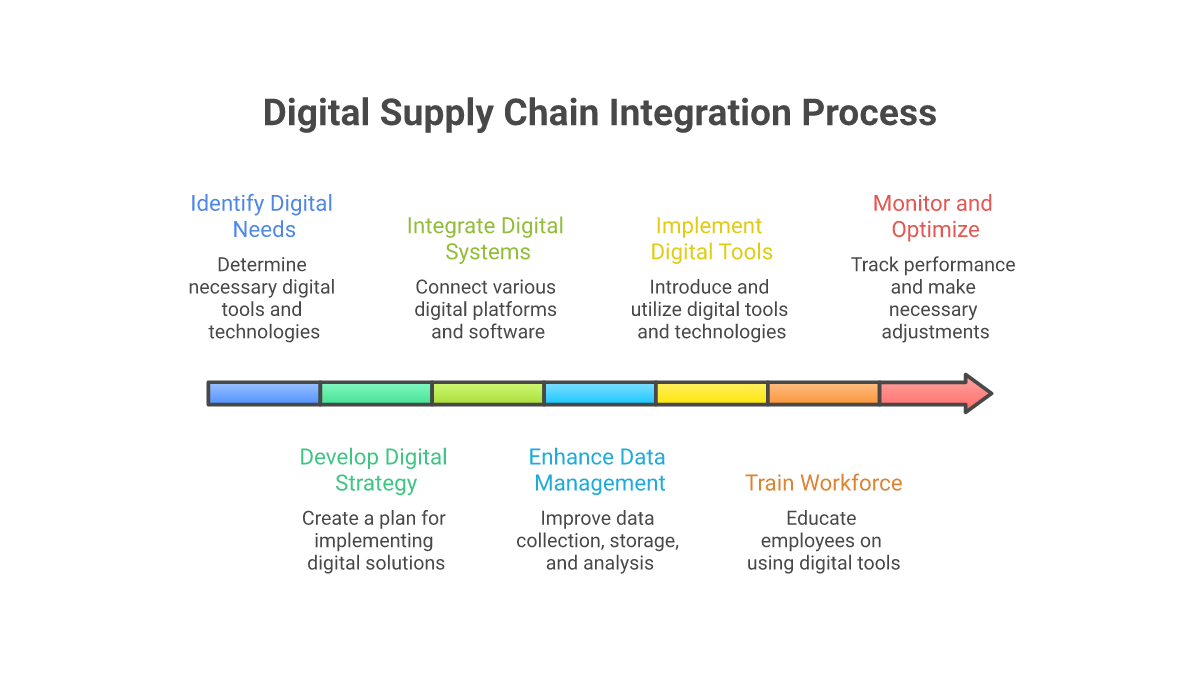
Digitization is accelerating, with 85% of companies planning major digital investments through 2025. The integration of Internet of Things (IoT) sensors, blockchain, and cloud-based platforms offers unprecedented visibility and control across supply chains.

Digital Supply Chain Integration - logistics trends 2025 visualization
Digital Supply Chain Integration

IoT deployment in logistics is projected to hit 50 billion connected devices by 2025, providing real-time data from vehicle locations to cargo conditions. Maersk’s use of IoT-enabled containers has improved cargo monitoring accuracy by 99% and reduced insurance claims by 40%.

Blockchain technology allows for end-to-end transparency in supply chains, with 65% of logistics firms planning blockchain implementation by 2025. Walmart’s blockchain food traceability initiative cut trace time from seven days to 2.2 seconds, greatly enhancing food safety and cutting waste.

Cloud-based transportation management systems (TMS) are emerging as essential integration platforms. Modern TMS solutions yield an average ROI of 7.5% of freight spend, with some users saving up to 12%. Real-time optimization of multi-carrier networks leads to significant efficiency gains.

APIs and microservices architecture enable seamless integration between systems and partners. Companies report 60% quicker partner onboarding and a 40% cut in integration costs through modern API approaches compared to traditional EDI methods.

Data Analytics and Visibility

Advanced analytics convert raw data into actionable insights. Leveraging predictive analytics, companies see a 25-30% reduction in inventory carrying costs while boosting service levels by 20-25%. Real-time visibility platforms provide unprecedented insight into shipment status and disruptions.

Control towers have evolved from simple visibility tools to AI-powered decision aids. Modern platforms process millions of events daily, spotting disruptions and responding before they impact operations. Early adopters report a 35% drop in supply chain exceptions and 45% faster response times.

Last-Mile Innovation

The last mile, accounting for up to 41% of total supply chain costs, is seeing innovative leaps through 2025. Autonomous delivery vehicles, including sidewalk robots and delivery drones, are transitioning from pilot programs to mainstream use in cities.

Micro-fulfillment centers are spreading in urban locations, with the market predicted to reach $5.3 billion by 2025. These centers cut delivery distances by 50-70% and enable 30-minute windows for essentials. Target’s urban strategy has reduced delivery costs by 90% compared to regional shipping.

Crowdsourced delivery platforms are expanding fast, with expectations to hit a $12.9 billion market by 2025. These platforms offer delivery flexibility and cut fixed costs, though companies must manage quality and reliability issues carefully.

The role of smart lockers and alternative delivery points is expanding, with installations expected to grow by 300% by 2025. These solutions cut failed deliveries by 70-80% and reduce last-mile costs by 35% compared to home delivery.

AI-driven real-time route optimization is cutting delivery times by 20-30% and improving vehicle utilization by 15-25%. Adjustments based on traffic, weather, and demand optimize delivery efficiency.

Customer Experience Enhancement

Innovation in the last-mile sector is increasingly focused on customer experience, with 82% of companies considering it a key differentiator. Real-time tracking, precise delivery windows, and flexible options are now expected rather than extra features.

Mobile apps and chatbots give customers more control over their deliveries, with 75% expecting real-time updates and modification options by 2025. Companies that meet these expectations report 30% higher customer satisfaction scores.

Conclusion

The logistics industry stands at a crossroads where technology adoption, sustainability imperatives, and evolving customer expectations come together, presenting both unprecedented challenges and opportunities. Success in 2025 and beyond won’t just come from implementing individual technologies but from harmonizing them into coherent, customer-centered solutions.

Organizations must focus on digital transformation while keeping sustainability objectives front of mind. The most successful companies will use AI and automation to boost efficiency and cut environmental impacts, while also meeting increasingly demanding customer expectations for speed and transparency.

As we look towards 2025, the road ahead is clear: invest in digital capacities, embrace sustainable approaches, and maintain a steadfast focus on customer experience. The future of logistics belongs to organizations that can integrate these elements while adapting to rapid market changes, all while implementing strategic warehouse automation trends that propel supply chain transformation.

The Future of Supply Chain Technology: How Predictive Analysis is Shaping Strategic Change

The Future of Supply Chain Technology: How Predictive Analysis is Shaping Strategic Change

Fast forward to 2026, and it’s clear that the influence of artificial intelligence on supply chains is nothing short of transformative. Over half of supply chain leaders anticipate that AI will be steering all key decisions. This isn’t merely a tech prediction—it’s a sweeping overhaul of global commerce. As we face unprecedented volatility in capacity markets, energy supplies, and environmental factors, the real advantage lies in adapting swiftly rather than predicting expectations.

Geopolitical strains, sustainability goals, and digital revolutions have fused, creating ideal conditions for a technological transformation in supply chains. PwC’s 2025 Digital Trends study reveals that 80% of manufacturers are dedicating a solid portion of their improvement budgets to smart innovations, including automation, data analytics, sensors, and cloud solutions. This surge in investment highlights a truth: traditional, reactive approaches to supply chain management can’t keep up in this era of constant upheaval.

This in-depth analysis seeks to unveil how predictive analytics is reshaping supply chain dynamics, diving into the technologies, strategies, and outcomes charting the path for future logistics triumphs. From AI-driven demand predictions to digital replicas of supply chains, we will explore real-world applications and strategic impacts these innovations have on the future of logistics.

For supply chain leaders steering this transformation, the crossroads of technology and operational strategy are more significant than ever. The ensuing analysis offers a strategic framework and actionable insights to harness predictive analytics for competitive benefit in modern supply chain settings.

The Growth of Predictive Analytics in Supply Chain Management

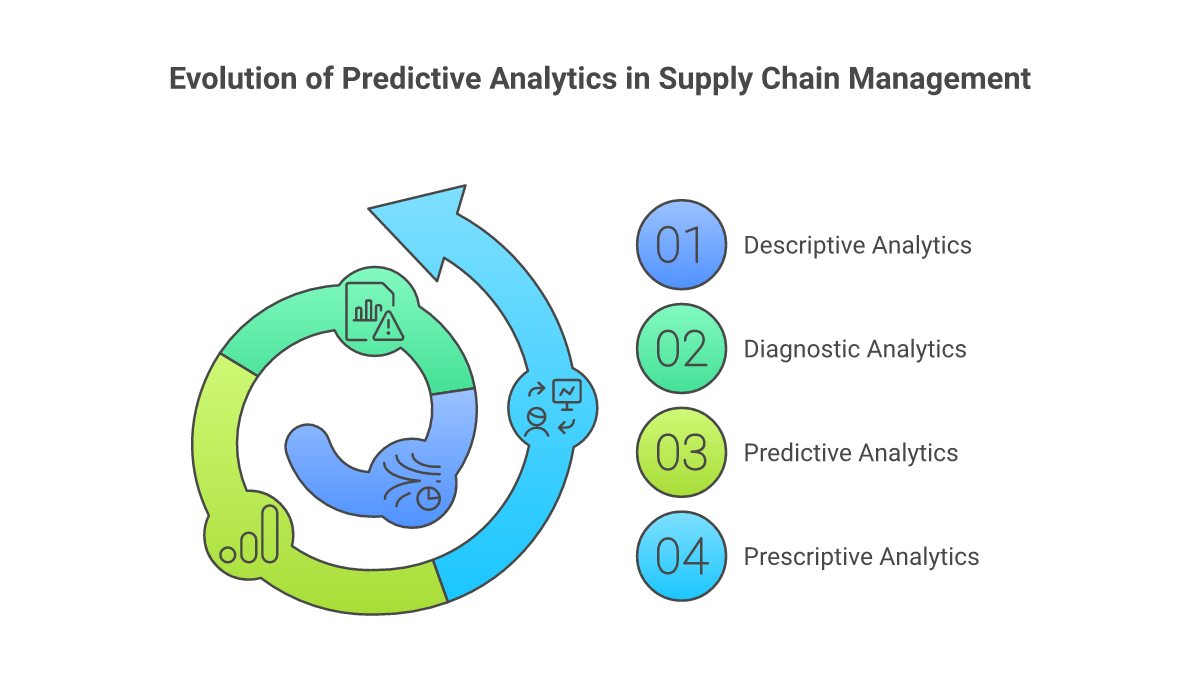
Transitioning from descriptive to predictive analytics isn’t just a tech upgrade—it’s a fundamental change in decision-making within supply chains. In 2025, supply chain teams braced themselves for persistent challenges, from market capacities to energy availability. By the year’s end, it was clear that predictive analytics had evolved from niche tools to essential operations.

The Evolution of Predictive Analytics in Supply Chain Management

Deloitte’s 2025 Supply Chain Digital Transformation Survey reveals that businesses employing advanced predictive analytics saw a 42% drop in stockouts and trimmed excess inventory by 37%. These gains were driven by the ability to process volumes of data from sources like IoT sensors and market indicators to generate real-time insights.

The technology enabling these capabilities has seen significant advancement. Today’s predictive platforms integrate machine learning algorithms that handle both structured and unstructured data, such as weather trends, social media buzz, and economic signals. This comprehensive method provides more precise and nuanced forecasts than traditional statistical models.

A key development is the democratization of predictive tools, accelerating their adoption. Once confined to specialized data teams, these tools are now accessible through easy-to-use interfaces, empowering broader organizational use and faster decision-making.

Beyond operational metrics, the impact is even felt in customer experience. Firms using predictive analytics report an 18% boost in customer satisfaction, thanks largely to reliable delivery times and pre-emptive issue management. This link between analytical prowess and enhanced customer interaction emphasizes the strategic value of predictive technology.

Critical Elements of Modern Supply Chain Predictive Analysis

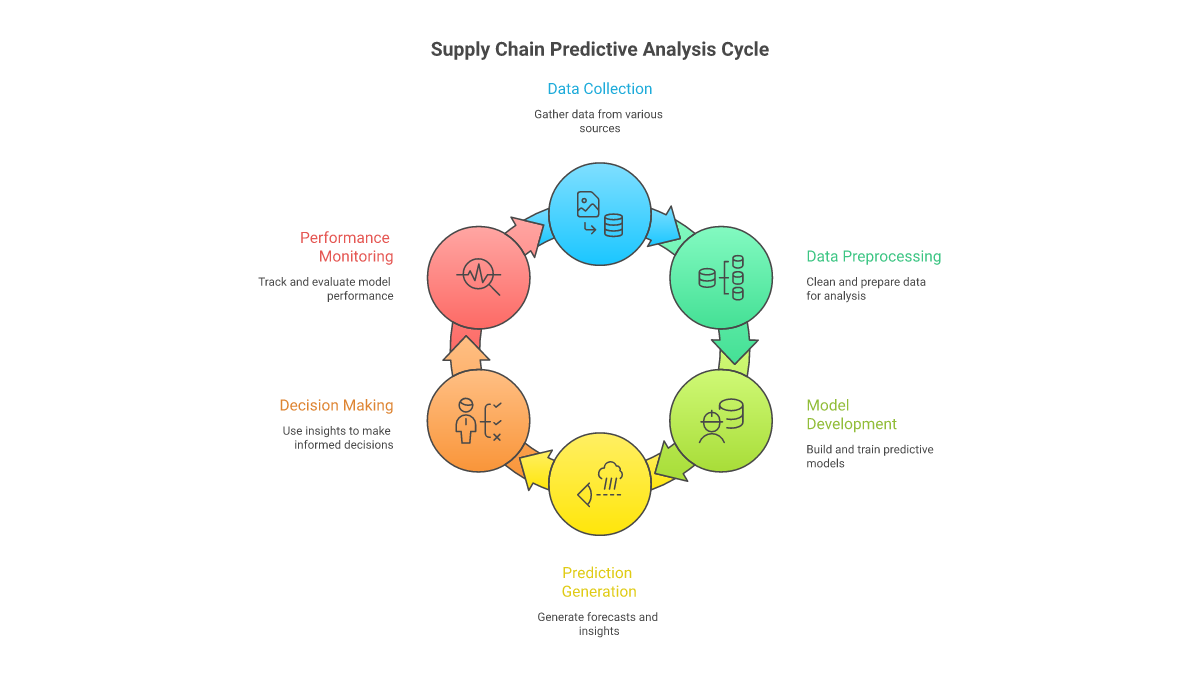
Today’s effective supply chain predictive analysis depends on a complex network of interlinked technologies and techniques. ASCM’s 2026 Technology Outlook identifies five main components that must work together to produce actionable insights.

Key Components of Modern Supply Chain Predictive Analysis

Firstly, data integration platforms lay the groundwork, pulling together information from varied sources like ERP systems, IoT devices, and market data. These platforms manage both structured and unstructured data, typically processing about 7.2 terabytes of supply chain data daily for a global manufacturer.

Next are the machine learning algorithms that form the core analytical engine, mining this data to uncover patterns and anticipate future results. Modern systems use ensemble learning methods, combining several algorithms to deliver prediction accuracy over 85% for short-term demands.

Then there’s digital twin technology, which creates virtual models of supply operations for scenario analysis and risk management. PwC’s research suggests that by 2026, 67% of Fortune 500 firms will have digital twins for essential supply chain elements.

The fourth element, automated decision support systems, turns analytical insights into practical advice. These systems typically cut decision latency by 65% compared to manual methods, while also enhancing decision quality by consistently applying best practices.

Lastly, visualization and reporting tools convert complex data into accessible insights for stakeholders. Modern setups automatically generate around 12 types of reports, ranging from operational metrics to strategic planning insights.

Managing Data Integration and Insights in Supply Chains

The key to successful predictive analysis lies in solid data integration and integrity management. According to Supply Chain Digital, firms focused on data quality management achieve a 43% boost in forecasting accuracy so compared to those with basic integration methods.

Successful strategies typically involve three core elements: automated data gathering, standardized data across systems, and ongoing quality checks. Leading organizations use scorecards to monitor data quality, tracking over 50 core metrics for accuracy and timeliness.

Gartner’s 2025 Supply Chain Technology Study highlights the need for monitoring and maintaining data quality across an average of 12 systems to achieve dependable predictive analytics. This spans ERP systems, transportation management systems, and external data sources.

Implementing Predictive Analytics: Strategies for a Resilient Supply Chain

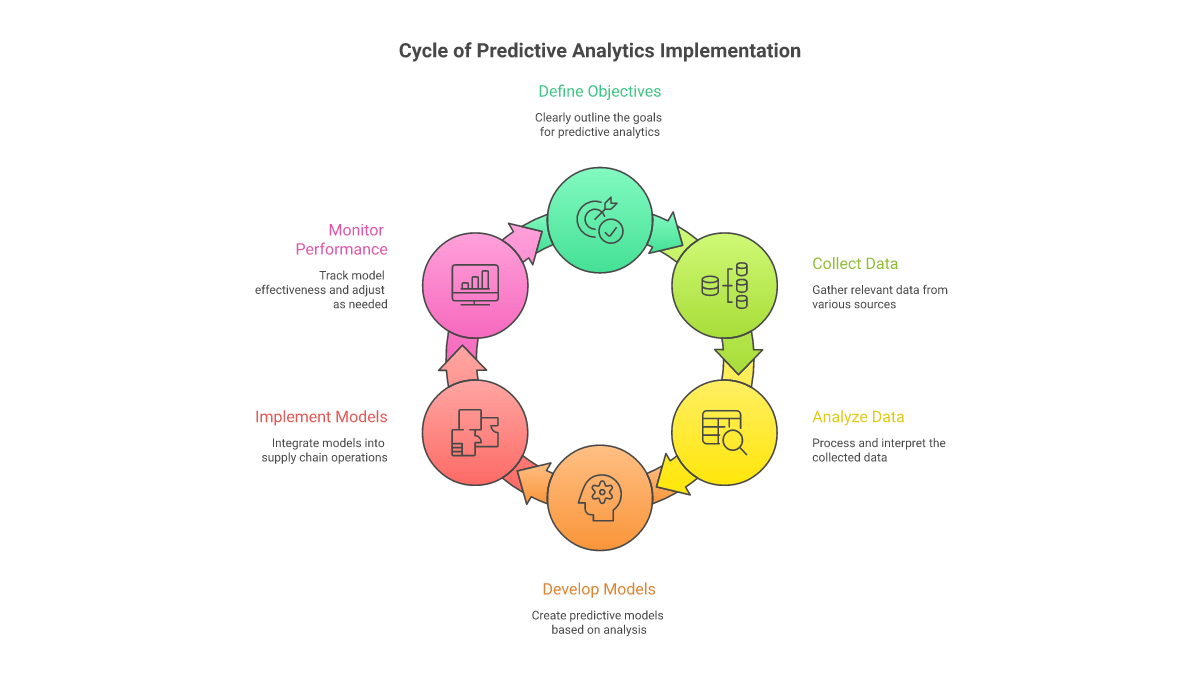
Introducing predictive analytics requires a well-coordinated strategy that balances tech capabilities with organizational preparedness. Deloitte’s 2026 Digital Transformation Roadmap suggests a three-phase implementation prioritizing quick wins and building towards full capabilities.

Implementing Predictive Analytics: Strategic Approaches for Supply Chain Resilience

Phase one is all about laying a foundation, typically lasting 3-6 months. During this time, firms audit their data sources, establish quality protocols, and implement basic predictive models. Early adopters report a 22% bump in forecast accuracy even at this early stage.

The second phase focuses on expanding analytical prowess and embedding predictions into daily operations, spanning 6-12 months. Companies typically focus on 4-6 specific use cases, such as demand forecasting and inventory efficiency, with success rates soaring when concentrating on high-value scenarios.

Phase three, beginning 12-18 months in, aims at scaling and optimizing. Here, firms integrate predictive abilities fully into their operations, achieving a 47% cut in planning cycles and a 35% boost in working capital efficiency.

Crucial to success are clear governance and decision rights. Firms that specify roles for data management and decision-making show 58% higher satisfaction with their analytics implementations.

Change Management and Workforce Training

The human aspect of analytics deployment can be just as challenging as the technical. PwC’s 2025 Digital Transformation Survey suggests that 72% of failed projects cite poor change management as a root cause.

Successful firms invest 15-20% of their budget in training and change initiatives. This includes technical training on new tools and broader education on data-driven decision principles.

Top companies develop comprehensive programs covering technical proficiency with analytical tools, understanding of statistical concepts and their business applications, and effective use of insights in decision-making.

Measuring Success: Evaluating KPIs and Return on Investment

Assessing the impact of predictive analytics requires a robust measurement framework. ASCM’s 2026 Benchmarking Study suggests organizations track immediate operational wins and long-term strategic benefits.

Operational metrics often include improved forecast accuracy (on average 35%), reduced inventory (20-45%), and increased order fulfillment rates (15-25%). Leading firms also measure decision-making efficiency, often slashing planning cycle times by 40%.

Financial perks aren’t limited to direct cost savings. Companies report working capital improvements of 12% and reduced supply chain operating costs by 8-15% within 6-9 months.

Strategically, benefits are tougher to quantify but crucial. Firms report better supplier relationships, increased customer satisfaction (20-30% improvement), and a better response to market changes.

ROI considerations should factor in both tangible and intangible benefits. As Deloitte’s analysis shows, mature implementations see payback in 18-24 months, with ROI between 150% and 400% over three years.

Looking Ahead: Future Trends and Technologies

The pace of predictive analytics is quickening, driven by tech advances and evolving business needs. By 2026, several trends will shape supply chain analytics.

AI will increasingly take on routine decision-making, as Forbes reports, allowing humans to focus on strategic decisions. It’s expected that 63% of organizations will rely on AI for such roles.

Real-time analytics will benefit from edge computing, with industry forecasts suggesting 75% of supply chain data processed at the edge by 2026, enabling quicker responses.

Quantum computing will surface for certain complex optimizations, potentially improving accuracy by over 40% for specific scenarios.

Sustainability analytics will become integral, with organizations tracking and optimizing the environmental impact across 80% of their operations, advancing supply chain sustainability.

Conclusion

Shaping supply chains through predictive analytics offers both opportunity and necessity. Companies that master these capabilities enjoy notable advantages in efficiency, customer service, and strategic agility.

Success requires combining technical skill with change management. Investments should focus on tech and people, prioritizing results over tech for its own sake.

As we turn to 2026, mastering predictive analytics will distinguish supply chain leaders. Organizations must build these capabilities now to stay competitive in a data-driven world, ensuring effective transformation and risk management in logistics.

Supply Chain Predictions 2025: Transformation Through Technology, Sustainability, and Resilience

Supply Chain Predictions 2025: Transformation Through Technology, Sustainability, and Resilience

Fast forward to 2026, and the global supply chain management application market is projected to soar to an impressive $31 billion, as outlined in this insightful report. This surge marks more than a technological shift; it’s a complete reimagining of how global supply chains function, connect, and transform. Looking ahead to 2025, the blend of AI advancements, sustainability drives, and geopolitical pressures brings both obstacles and opportunities, reshaping the industry as we know it.

Recent findings from MIT’s Sustainable Supply Chain Lab highlight that more than 70% of executives now rank next-gen supply chain capabilities among their top three priorities for 2025. This trend underscores a widespread understanding that the traditional linear supply chains can’t keep pace with an increasingly intricate and interconnected global market. The real question isn’t if change is coming, but how businesses will navigate this accelerated transformation.

This in-depth analysis dives into the trends, technologies, and strategic shifts shaping supply chain operations in 2025. From the emergence of agentic AI to the pressing need for environmental sustainability, we explore how these forces are merging to establish new operational standards. Crucially, we’ll offer actionable insights on positioning organizations to thrive in this ever-evolving supply chain arena.

For supply chain professionals, tech leaders, or business executives, grasping these emerging supply chain predictions for 2025 is vital for informed strategic planning. Let’s explore the major developments set to redefine supply chain management’s future.

Digital Transformation and AI Integration in Supply Chain Trends

We’re at a pivotal moment in AI integration within supply chains. According to Gartner’s latest research, by 2025, more than 75% of enterprise supply chains will include ‘agentic AI’, which are systems making decisions without human input. This marks a dramatic shift from AI as mere assistance to a decision-making entity.

Digital Transformation and AI Integration in Supply Chain Trends - supply chain predictions 2025 visualization
Digital Transformation and AI Integration in Supply Chain Trends

Companies jumping on board with advanced AI systems are already noting substantial improvements. A PwC study notes that businesses embracing AI-driven supply chain solutions see about a 15% drop in inventory costs and a 20% boost in forecasting accuracy. These aren’t just minor gains—they’re game-changing improvements altering competitive landscapes.

Another critical development is ambient invisible intelligence. This technology quietly operates, constantly monitoring and making real-time adjustments to enhance supply chain performance. By 2025, it’s estimated that 60% of large enterprises will have ambient intelligence as part of their supply chains, forming a network that adjusts before disruptions hit.

Digital twins are becoming indispensable in operations. These virtual models of supply networks are gaining complexity, and by 2025, they’ll use real-time IoT sensor data for network optimization, risk management, and resource planning. Their role has shifted from simulation to necessity.

Finally, AI tech is becoming more accessible. Cloud solutions and ‘AI-as-a-Service’ are extending sophisticated analytics capabilities to mid-sized firms that previously couldn’t afford such investments. This is driving widespread adoption of AI-powered tools across different market levels.

Machine Learning Applications in Demand Forecasting and Supply Chain Analytics

Machine learning is transforming demand forecasting. Modern algorithms evaluate countless variables, from weather to social media chatter, to predict consumer actions with impressive precision. Research shows a 30% reduction in forecast errors when using ML compared to older methods.

Practical examples highlight their impact. A major European retailer adopted ML demand forecasting in 2024, leading to a 40% drop in out-of-stock instances and a 25% cut in inventory costs. These advancements enhance both customer satisfaction and operational performance.

Autonomous Decision-Making Systems

Autonomous decision-making systems are radically shifting supply chain paradigms. By 2025, 40% of routine decisions will be autonomous, managing tasks from stock replenishment to supplier choices, with algorithms optimizing outcomes based on myriad factors.

Initial deployments show promising results. Firms utilizing these systems note a 35% drop in decision-making delays and a 25% enhancement in decision quality, benefiting overall operational outcomes. This speed and precision are crucial competitive edges.

Sustainability and Environmental Impact

Environmental sustainability has evolved into a central factor driving supply chain strategies. MIT’s 2025 State of Supply Chain Sustainability Report reveals that 85% of companies now see sustainability as a key priority, and 60% are ramping up investments in sustainable practices despite economic tightness.

Sustainability and Environmental Impact - supply chain predictions 2025 visualization
Sustainability and Environmental Impact

The logistics industry, responsible for roughly 24% of global CO2 emissions, is particularly pressed to cut its environmental impact. Leading companies are setting ambitious goals—achieving carbon neutrality by 2040 with key milestones by 2025.

Green logistics is seeing rapid growth. The global green logistics sector, valued at $1.5 trillion in 2024, is projected to hit $2.3 trillion by 2030, driven by regulatory pressures and consumer expectations for eco-friendly practices.

Technological innovation is pivotal for sustainable methods. AI-driven route optimization is slashing fuel usage by 15%, and advanced analytics are pinpointing inefficiencies to cut carbon footprints. Electric and hydrogen vehicles are becoming more prevalent in logistics, with major players aiming for 40% zero-emission fleets by 2025.

Circular supply chain frameworks are catching on. Companies are restructuring to minimize waste and maximize resources, including efficient systems for returns and recycling alongside forward distribution.

Renewable Energy Integration

Renewable energy is being integrated rapidly into supply chain operations. By 2025, an estimated 45% of logistics facilities will employ some form of renewable energy generation. Solar and wind power are becoming standard in new builds.

The economic case for renewables aligns with environmental goals. As renewable technology costs fall and traditional energy prices climb, comprehensive renewable strategies yield an average 30% energy cost cutting over three years.

Sustainable Packaging Innovations and Green Supply Practices

Packaging sustainability is gaining importance. Innovative materials and design are reducing waste while maintaining product integrity. The sustainable packaging market is set to expand by 65% between 2024 and 2025, driven by consumer and regulatory demands.

Progress in this area is speeding up. Biodegradable materials, minimized packaging, and smart tech that extends product life are mainstreaming, with leading firms noting up to 40% reductions in packaging waste.

Supply Chain Resilience and Risk Management

Supply chain resilience has moved up on the priority list. According to KPMG’s 2025 supply chain outlook, 78% of companies are significantly boosting their investment in resilience and risk management, marking a shift in how supply chains are viewed.

Supply Chain Resilience and Risk Management - supply chain predictions 2025 visualization
Supply Chain Resilience and Risk Management

Organizations are adopting multi-sourcing strategies as a norm. They’re developing complex supplier networks across regions to protect against disruptions and geopolitical threats, despite the increased management complexity.

Advanced analytics and AI are revolutionizing risk management. Predictive models using vast data sources are preemptively identifying disruptions. Companies using these tools report a 40% better capability to predict and handle risks.

Near-shoring and friend-shoring are accelerating. By 2025, 45% of businesses are expected to have moved at least 20% of sourcing closer or to politically aligned territories, indicating a major restructuring from cost-optimized global networks.

There’s a surge in inventory optimization tech investment. Firms are employing AI systems for balancing efficiency and resilience, determining optimal inventory levels across complex networks with various risk and demand factors.

Network Optimization Strategies

Network designs are evolving to emphasize resilience with efficiency. Hybrid networks offering both regional and global advantages are emerging, aided by advanced modeling tools that optimize various factors.

‘Resilience by design’ is becoming more popular. Instead of adding flexibility and redundancy later, companies are incorporating these elements into their network structures from the start, leading to a 35% reduction in disruption-related losses.

Real-time Risk Monitoring in Future Supply Chain Operations

Real-time risk monitoring is becoming typical. Companies are implementing systems tracking everything from weather to social media, providing early disruption warnings and enabling proactive measures.

Satellite data and IoT sensors are expanding monitoring capacities. Companies now have real-time shipment tracking and environment condition assessments, enhancing risk management and operational efficiency.

Conclusion

As we move towards 2025, the supply chain industry is experiencing a remarkable transformation. With digital tech, sustainability, and resilience as key drivers, new challenges and opportunities are arising across sectors. A strategic balance of these priorities is key to success.

Businesses need to take proactive steps to prepare for this evolving market. This includes investing in digital skills, pushing sustainable initiatives, and crafting robust networks. Companies that see these shifts as opportunities rather than obstacles will gain a competitive edge through supply chain digital transformation.

The future of supply chain management lies in using these trends to maintain excellence. Businesses that adeptly handle this change will thrive in increasingly complex and dynamic environments.

The Future of Supply Chain Management: Digital Transformation in 2026 and Beyond

The Future of Supply Chain Management: Digital Transformation in 2026 and Beyond

Global investment in Digital Transformation will reach $3.4 trillion in 2026 , with supply chain management modernization emerging as a top priority for companies everywhere. This massive investment signals a major shift from traditional linear models to dynamic, interconnected networks fueled by AI and automation. While 80% of companies already see greater resilience from their digital initiatives, the coming wave of transformation demands more than just resilience—it requires intelligence, speed, and security at new levels.

There’s never been a greater urgency for digital transformation in supply chain management. With geopolitical changes, evolving trade policies, and increasing cost pressures reshaping the global market, companies face a pivotal choice: embrace comprehensive digital transformation or risk being left behind. This isn’t just about rolling out new tech—it’s about wholly reimagining how supply chains function in a complex and connected world.

In this comprehensive look, we’ll explore how leading firms are using digital technologies to build supply chains that are more resilient, efficient, and intelligent. From AI-driven demand forecasting to blockchain-enabled transparency, we’ll check out the key technologies, strategies, and best practices that will define top-tier supply chain management in 2026 and beyond.

As we navigate these transformative changes, we’ll offer actionable insights and real-world examples of how companies are successfully employing digital solutions to tackle traditional supply chain challenges and secure sustainable competitive advantages in a rapidly changing market.

The Current State of Supply Chain Digital Transformation

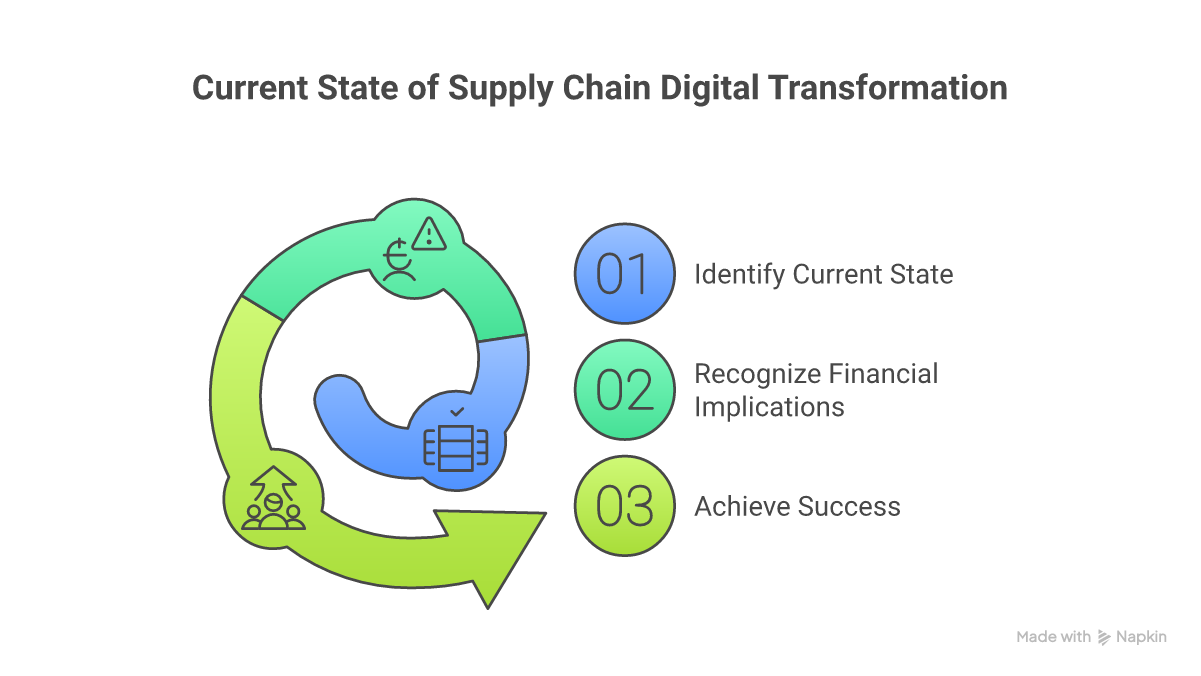
According to fresh industry analysis, supply chain organizations are ramping up their digital transformation initiatives at an impressive pace. By 2026, 73% of supply chain leaders plan to have implemented advanced digital technologies across their operations, showing a big jump from 45% in 2024. This acceleration is driven by both external pressures and internal needs to boost efficiency and resilience.

The Current State of Supply Chain Digital Transformation - supply chain management visualization
The Current State of Supply Chain Digital Transformation

The financial impact of this transformation is significant. Companies that have effectively implemented comprehensive digital supply chain solutions report cost reductions of 15-25% in operational expenses while achieving 20-30% improvements in inventory accuracy. These gains are particularly crucial in industries with intricate supply chains like manufacturing and retail, where even small improvements can equal millions in saved costs.

Patterns in technology adoption reveal a clear hierarchy of focus among supply chain leaders. AI and Machine Learning lead the investment focus with 65% of organizations planning major AI rollouts by 2026 . Cloud-based supply chain platforms follow, with 58% of businesses prioritizing cloud migration to enable better visibility and collaboration across their networks.

Real-world data shows that companies taking a holistic approach to digital transformation achieve far better results than those opting for piecemeal solutions. Businesses that set up integrated digital platforms report 40% higher returns on investment compared to those using standalone solutions, underscoring the importance of strategic alignment in digital transformation efforts.

Yet, the path to digital transformation isn’t without its hurdles. Surveys indicate 62% of organizations cite data integration and quality issues as their biggest challenges, while 54% struggle with managing change and adapting their workforce to new technologies.

Key Technology Enablers for Supply Chain Efficiency

Leading the charge in supply chain digital transformation are key technologies that are radically changing how operations are managed and optimized. AI and Machine Learning are standout innovators, with applications ranging from demand forecasting to route planning and inventory management.

Advanced analytics and predictive modeling have become more sophisticated, allowing AI systems to process vast amounts of data and generate forecasts with 85-95% accuracy. This is a notable improvement over traditional methods, which typically hit accuracy rates of 60-75%.

The Internet of Things (IoT) and sensors are another backbone of digital supply chains, offering real-time monitoring and visibility. By 2026, the expected number of IoT devices in supply chain applications is 45 billion, providing a continuous flow of actionable data for optimization.

Transforming Supply Chain Operations Through Digital Innovation

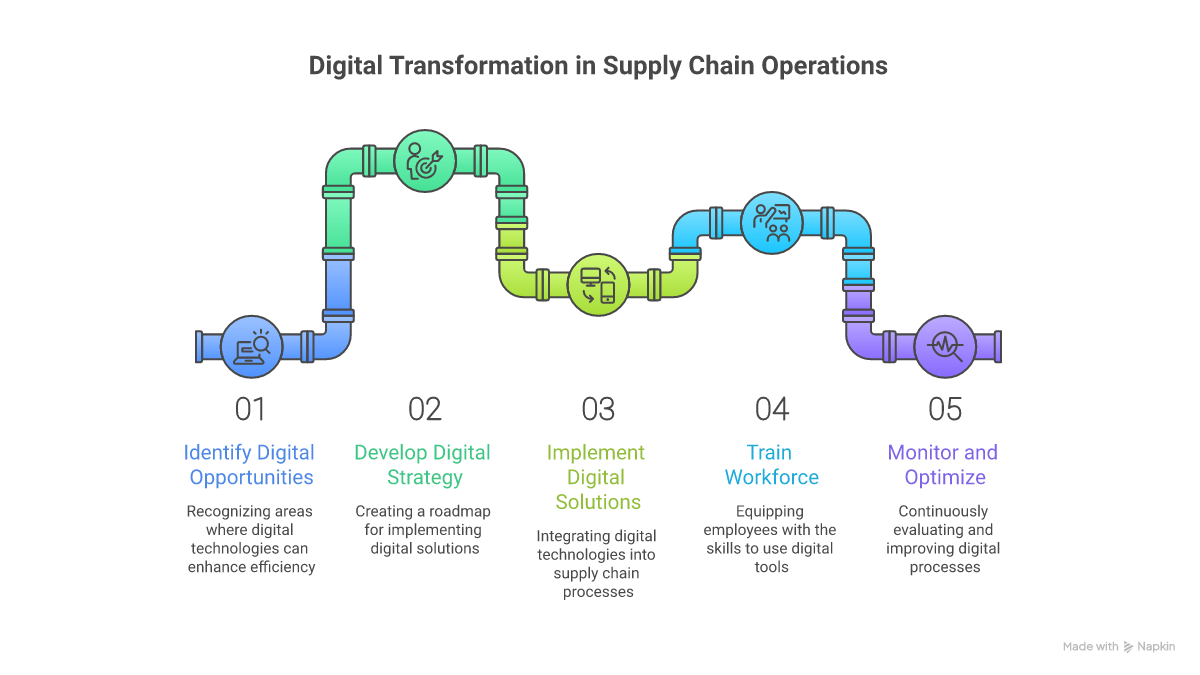
Putting digital transformation into practice in supply chain operations is reshaping traditional processes in many ways. Companies at the forefront are seeing impressive results from strategically deploying digital technologies and data-driven decision-making.

Transforming Supply Chain Operations Through Digital Innovation - supply chain management visualization
Transforming Supply Chain Operations Through Digital Innovation

Advanced analytics and machine learning algorithms are now capable of processing massive amounts of data to optimize inventory levels with unprecedented precision. Leading companies report inventory reductions of 20-30% while improving service levels by 15-20% using AI-driven demand forecasts and automated systems.

Digital twin technology is emerging as a transformative tool for optimizing supply chains. By creating virtual models of supply chain networks, companies can simulate scenarios and test strategies before implementing them. Those using digital twins report a 25% decrease in disruptions and a 30% boost in planning efficiency.

Automation technologies, especially in warehousing and logistics, are yielding significant operational benefits. Robotics and autonomous systems cut order processing times by up to 65% while boosting accuracy to 99.9%. These enhancements directly improve customer satisfaction and reduce operational costs.

Blockchain technology is tackling long-standing issues of transparency and traceability in supply chains. Companies using blockchain report 40% quicker supplier onboarding and a 50% drop in documentation processing time.

Process Automation and Workflow Optimization

Automating supply chain processes is crucial to digital transformation efforts. Advanced robotics and autonomous systems are revolutionizing warehouse operations, with technologies like automated guided vehicles (AGVs) and robotic picking systems becoming more common in modern distribution centers.

AI is pivotal in optimizing workflows, with machine learning algorithms analyzing operational data to pinpoint bottlenecks and suggest improvements. Firms using AI-driven workflow optimization report productivity gains of 25-35% across their supply chains.

Intelligent document processing (IDP) systems are transforming traditional paper-heavy processes, slashing manual data entry by up to 80% while increasing accuracy to 99%. This frees up supply chain professionals to focus on more strategic work.

Data-Driven Decision Making in Supply Chain Management

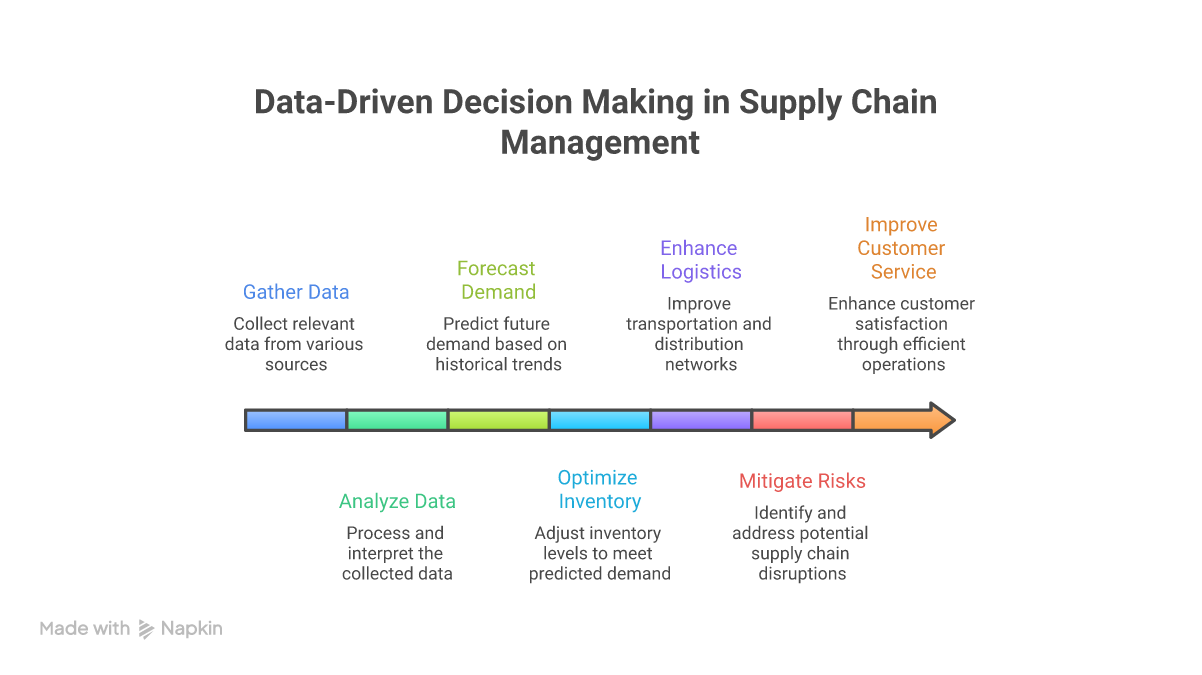
The shift toward data-driven decision making marks a critical change in supply chain operations. Advanced analytics platforms are processing petabytes of data daily, providing insights that drive both strategic and tactical decisions across supply networks.

Data-Driven Decision Making in Supply Chain Management - supply chain management visualization
Data-Driven Decision Making in Supply Chain Management

Predictive analytics tools have greatly advanced, enabling AI to forecast demand with over 90% accuracy across various time frames. This allows companies to optimize inventories and cut working capital needs by 15-25%.

Real-time analytics platforms offer unprecedented visibility into supply chain activities, enabling firms to identify and address disruptions in minutes rather than hours or days. Businesses using real-time analytics report a 40% drop in disruption impacts.

The integration of external data sources, such as weather patterns, social media trends, and economic indicators, supports more nuanced risk assessment and mitigation strategies. Organizations leveraging comprehensive data integration experience 30% fewer disruptions and 25% faster recovery times.

Machine learning algorithms optimize pricing and procurement decisions by analyzing market conditions and supplier performance. Companies adopting AI-enhanced procurement systems see cost savings of 10-15% on average.

Advanced Analytics and Predictive Modeling

The role of advanced analytics in supply chain management has evolved beyond basic reporting to include sophisticated predictive and prescriptive modeling. These tools enable firms to shift from reactive to proactive decision-making.

Machine learning models now consider numerous variables simultaneously to optimize routing and logistics, lowering transport costs by 15-20% while improving on-time delivery by 25%.

Cognitive analytics systems analyze unstructured data, such as social media and weather updates, to spot potential risks before they occur. Companies employing these systems report a 35% enhancement in risk identification and mitigation.

Building Resilient Supply Chain Networks

The emphasis on supply chain resilience has grown significantly, with companies investing heavily in technologies and strategies to build more adaptable and reliable networks. Digital transformation plays a vital role in this shift, enabling real-time visibility and swift response capabilities.

Network optimization technologies allow businesses to design more resilient supply chain configurations, with AI systems evaluating thousands of variables to find the best structures. Firms adopting these solutions report a 30% cut in vulnerability scores.

Improved risk management capabilities, enhanced by machine learning and predictive analytics, allow companies to identify and handle potential disruptions before they affect operations. AI-powered early warning systems detect risks on average 14 days sooner than traditional methods.

Supplier diversification, supported by advanced analytics, evaluates and monitors hundreds of suppliers across various risk areas. Companies leveraging these systems report a 40% drop in supplier-related disruptions.

Digital collaboration platforms promote tighter integration with key suppliers and partners, facilitating real-time information sharing and coordinated responses to disruptions. Firms with mature digital collaboration abilities respond to supply chain disruptions 45% faster.

Risk Management and Mitigation Strategies in Global Supply Chain Challenges

Implementing comprehensive risk management strategies is key in supply chain digital transformation. Advanced analytics and AI systems are deployed to identify, assess, and mitigate risks across networks.

Predictive risk analytics allow companies to foresee disruptions weeks or months ahead, enabling proactive strategies. Businesses using these tools cut disruption impact by 50%.

Automated risk monitoring systems continuously track risk indicators globally, issuing real-time alerts and actions when issues arise.

Future Trends and Emerging Technologies in Modern Supply Chain

Looking to 2026 and beyond, several emerging technologies promise to further revolutionize supply chain management. Quantum computing offers solutions for complex optimization issues beyond traditional computing capabilities.

Edge computing and 5G networks are boosting real-time processing, particularly in IoT applications, with firms reporting 60% faster response times and a 40% cut in data costs.

AI continues to advance, integrating natural language processing and computer vision for smarter automation and decision-making. Early adopters of these systems see 35-45% productivity jumps in key areas.

Blockchain technology is evolving past basic tracking to support new forms of collaboration and automation in supply chains. Smart contracts and DeFi streamline payment and documentation, cutting processing times by 90%.

Autonomous systems, like drones and self-driving vehicles, are growing more sophisticated, expected to play a bigger role in delivery and warehouse operations by 2026. Companies testing these report potential delivery cost cuts of 25-35%.

Innovation and Technology Adoption

Tech adoption in supply chain management is speeding up as businesses see digital transformation as crucial. Success demands a strategic approach to innovation and technology use.

Firms are adopting advanced methods for evaluating and deploying technology, with 72% now using formal innovation management processes. This structured approach leads to 35% higher success rates in transformation efforts.

Cross-functional collaboration and integration are becoming vital for successful technology adoption, with dedicated innovation teams blending technical, operational, and business expertise.

Conclusion

The digital transformation of supply chain management offers both unprecedented opportunities and necessary changes for modern enterprises. Looking forward to 2026 and beyond, the effective use of digital tech will increasingly define competitive success globally.

Companies must adopt a strategic and holistic approach to digital transformation, focusing on more than just technology but also redesigning supply chain processes. This involves investing in talent development, fostering innovation, and building strong digital partnerships.

The future of supply chain management will be defined by organizations that combine advanced tech, data-driven decision making, and adaptable operational models to create truly intelligent and resilient networks. The time to act is now, or risk falling behind as digital leaders surge ahead.

Supply Chain Management: Navigating the Digital Transformation Era in 2026

Supply Chain Management: Navigating the Digital Transformation Era in 2026

The global supply chain management sector is on track to hit $81.55 billion by 2035 , climbing at an annual growth rate of 10.65% from its current value of $32.8 billion in 2026. But these numbers tell just part of the story. Behind them lies a radical shift in how companies manage their supply chains in a world increasingly defined by AI, geopolitical shifts, and new market demands.

For those steering businesses through these turbulent times, a deep understanding of supply chain management is more vital than ever. As digital technologies merge with sustainability goals and changing consumer habits, the classic supply chain models are getting an overhaul. By 2026, companies that don’t evolve could forfeit 23% of their market share to nimble competitors, based on recent analyses.

This guide dives into the current state of supply chain management, the trends steering its future, and strategies to build resilient, tech-driven supply networks. From AI-driven optimization techniques to eco-friendly practices, we’ll look at how top organizations are evolving their supply chains into powerhouse assets.

Whether you’re a seasoned professional in supply chains or a business leader aiming to bolster operations, this analysis offers pragmatic insights for maneuvering through the dynamic realm of global supply chain management.

The Evolution of Modern Supply Chain Management

Supply chain management has come a long way since its roots in logistics and inventory. Today, it’s about sophisticated, connected networks that make decisions based on real-time data and cutting-edge analytics. The sector’s projected growth to $48.59 billion by 2030 underscores this leap from simple linear setups to vibrant, adaptable systems.

The Evolution of Modern Supply Chain Management - supply chain management visualization
The Evolution of Modern Supply Chain Management

The digital revolution is the driving force behind this shift. In 2026, 78% of supply chain leaders highlight digital transformation as central to their competitiveness . This marks a hefty rise from five years prior, when only 34% prioritized digital capabilities within their supply operations.

AI and machine learning are transforming the game. Recent studies show that AI-enhanced supply chains have 41% better demand forecasting accuracy and slash inventory costs by 38%. Giants like Amazon and Walmart are trailblazers in applying these methods, raising the bar for efficiency.

The COVID-19 pandemic sped up this digital leap, pushing companies to rejig their strategies quickly. By 2026, 89% of businesses will have adopted some form of digital supply chain technology, a significant rise from 39% in 2019. This widespread shift underscores that traditional, linear supply chains simply can’t keep pace with modern needs.

The benefits go beyond just efficiency boosts. Firms with digitally advanced supply chains report 26% better profit margins and roll out new products 23% quicker. These gains spring from improved transparency, predictive power, and automated decision processes that define today’s sophisticated supply operations.

Key Components of Modern Supply Chain Management

Understanding what makes modern supply chain management tick involves looking at five key areas that define success in 2026. First up, integrated planning and execution, where data flows freely across company walls in real-time. Data shows that firms with integrated planning cut supply chain costs by 29%.

Key Components of Modern Supply Chain Management - supply chain management visualization
Key Components of Modern Supply Chain Management

The second element zeroes in on visibility and analytics. Businesses using advanced analytics tools report 43% better inventory refinement and a 35% uptick in order fulfillment. This heightened visibility stretches beyond internal workings to take in supplier networks and customer demand trends.

Next is the escalating focus on sustainability and circular economy principles. By 2026, 67% of buyers factor in a company’s environmental impact when deciding what to buy, making green supply chain tactics not just trendy, but necessary.

Risk management and resilience make up the fourth key component. Following recent global disruptions, 82% of firms have set up advanced risk watchdog systems. These systems blend real-time data with predictive analytics to preempt and tackle potential supply chain hiccups before they can disrupt operations.

Lastly, integrating talent and technology is crucial. With a supply chain talent shortfall projected to hit 2.1 million jobs by 2030, companies need to hone digital skills and put in place user-friendly tech solutions.

Digital Supply Chain Technologies and Smart Solutions

The tech backbone powering current supply chains has taken giant strides. Cloud platforms now lay the foundation, with 91% of firms using cloud systems for supply management by 2026. These platforms make real-time teamwork and data sharing easy across the globe.

The Internet of Things (IoT) is playing a pivotal role, with the number of connected devices in supply operations set to reach 75 billion by 2027. These gadgets allow real-time tracking, condition overseeing, and predictive maintenance, all of which bolster efficiency.

Blockchain technology has graduated from mere pilots to a mainstay for supply chain openness. By 2026, 45% of businesses will deploy blockchain for track-and-trace abilities, supplier checks, and self-executing contracts.

Process Integration and Optimization

End-to-end process integration marks the top players in this field. Companies that have achieved full integration report 34% lower running costs and 27% faster order-to-delivery times than their counterparts.

Advanced planning and scheduling (APS) systems, bolstered by AI, refine complex supply setups in real time. These systems crunch data by the millions to balance inventory, transportation, and production demands.

Automation, from robotic process automation (RPA) to self-driving vehicles, is revolutionizing old ways. By 2026, 63% of warehouses will employ automation, realizing a 45% boost in productivity.

Supply Chain Strategy and Planning

Long-term supply chain planning has shifted from yearly tasks to ongoing, data-driven pursuits. Businesses with dynamic planning systems report 31% better forecasting precision and 24% lower inventory expenses.

Supply Chain Strategy and Planning - supply chain management visualization
Supply Chain Strategy and Planning

Network design and refining are now must-have skills. Corporations routinely analyze their network setups with top-tier modeling tools, with 57% doing quarterly reviews in 2026, up from just 12% in 2020.

Demand planning has advanced through machine learning, which looks at countless factors to forecast demand with accuracy rates above 85% on SKU levels.

Managing supplier relationships has transformed into building strategic alliances. Compared to five years ago, leading firms now allocate 38% more resources to fostering supplier collaborations and development plans.

Risk management strategies have become more nuanced, featuring real-time checks and predictive insights. Companies tapping advanced risk setups see 42% fewer disruptions.

Network Design and Optimization

Modern network design stresses flexibility and toughness rather than just cost-cutting. More firms are employing hybrid models mixing regional and global networks, with 73% favoring this mix by 2026.

Location analytics and planning tools make constant network sharpening possible. Firms using these tools enjoy 29% enhanced service levels and 19% trimmed transportation costs compared to static networks.

The emergence of micro-fulfillment centers and dark stores highlights changing consumer expectations. By 2026, 65% of city deliveries will originate from these local setups, cutting final delivery expenses by 23%.

Inventory Optimization and Logistics Management

Advanced inventory optimization now factors in hundreds of variables to find ideal stock levels. Firms using these systems cut working capital by 33% while keeping or improving service standards.

Multi-echelon inventory optimization (MEIO) has become a norm, with 78% of sizable organizations using MEIO by 2026. These solutions optimize the whole network instead of single locations.

Real-time inventory tracking and analytics support dynamic network balance. Companies using these tools lower obsolescence costs by 41% while raising product availability by 27%.

Technology Integration and Digital Transformation

Supply chain digital transformation has shifted from test cases to broad application. By 2026, firms will spend an average of 8.3% of revenue on supply chain tech, up from 3.2% in 2020.

AI and machine learning are now commonplace. Businesses utilizing these technologies report a 37% boost in forecast accuracy and a 42% faster reaction to supply chain disruptions.

Cloud platforms support modern supply chains, with 94% of firms using cloud applications by 2026. These systems enable real-time data sharing and teamwork across the globe.

Integration of emerging tech, like blockchain and IoT, is picking up speed. Companies using these technologies see 31% better supply clarity and 28% lower compliance costs.

Digital twins and simulation tools have become must-haves for planning. Businesses employing these technologies report 44% better planning precision and quicker decision-making by 29%.

Data Analytics and Visibility

Advanced analytics can now process huge volumes of supply data in real-time. Companies with mature analytics enjoy 39% improved forecast accuracy and 27% lower operating costs.

Control towers have turned into smart operation centers, offering full visibility and decision aid. Businesses using these systems experience 34% fewer disruptions and 41% faster problem-solving.

Predictive analytics aid proactive risk management and optimization. Companies embracing these tools spot potential issues 19 days sooner than conventional methods.

Automation and Robotics

Warehouse automation is reaching new heights, with 72% of large centers using autonomous robots by 2026 . These systems enhance output by up to 65% while reducing errors by 85%.

Automation isn’t just for physical tasks; it extends to administrative duties too. Firms implementing robotic process automation in supply chain roles cut processing times by 43% and lower costs by 31%.

Collaborative robots, or cobots, have become standard in production and logistics. Companies using cobots report a 38% gain in worker output and a 29% dip in injury rates.

Future Trends and Challenges in Supply Chain Dynamics

The future of supply chain management will pivot on several emerging trends. Sustainable practices are becoming necessary, with 83% of companies implementing broad eco-friendly programs by 2026.

Circular economy models are changing supply chain design. Firms adopting these models cut waste by 47% and use resources 29% better.

The talent gap remains a hurdle, with demand for digital skills in supply chains growing 31% annually. Companies are tackling this through innovative training and automation.

Geopolitical uncertainties keep affecting global supply chains. Businesses are opting for regional diversification, with 67% maintaining multiple sources for key components.

Climate change and environmental policies present growing challenges. Firms are investing 12% more annually in sustainable supply practices to tackle these challenges.

Emerging Technologies

Quantum computing applications in supply chain optimization are showing promise. Early users report up to 47% gains in complex network issues.

5G and edge computing open new possibilities for real-time control and automation. Companies using these technologies enjoy 23% quicker response times and 35% enhanced asset use.

Augmented reality is transforming warehouse tasks and maintenance. Firms using AR see 41% faster training and 33% fewer picking errors.

Sustainable Supply Chain Practices

Cutting carbon footprints has become a crucial metric. Firms setting up carbon tracking systems cut emissions by 34% on average.

Circular supply chain models are catching on, with 58% having reverse logistics by 2026. These initiatives cut waste by 42% and create new revenue channels.

Eco-friendly packaging is making a difference. Companies using green packaging reduce costs by 27% and boost customer satisfaction by 31%.

Conclusion

The pace of evolution in supply chain management is blistering, driven by tech innovation and shifting market needs. Companies embracing digital transformation while focusing on sustainability will find themselves best equipped for success.

Thriving in modern supply chain management requires a careful blend of tech know-how and strategic foresight. Firms must invest in digital tools and human skills to foster resilient and efficient supply systems.

Looking forward, marrying advanced tech with sustainable practices will distinguish supply chain leaders. Those adapting to these shifts while maintaining operational efficiency will secure lasting advantages in a complex global marketplace. Effective logistics and supply chain mastery will remain central to thriving in this evolving world.

Warehouse Automation in 2026: A Comprehensive Implementation Guide with ROI Focus

Warehouse Automation in 2026: A Comprehensive Implementation Guide with ROI Focus

By 2024, the global market for warehouse automation hits a pivotal $26.5 billion, showing strong potential with an anticipated 15.9% CAGR all the way through 2034. But here’s what many logistics operators miss: it’s not just about setting up robots—it’s about coordinating a complex mix of technologies to bring tangible returns on investment and safeguard operations against rising labor costs and market shifts.

This strategic requirement couldn’t come at a better time for the industry. With about 80% of warehouses still running without any automation, the opportunity for change is enormous. The real challenge isn’t just the technology—it’s the strategy behind implementing it. Recent reports show that facilities deploying specific warehouse automation solutions see a 40% boost in productivity compared to broad, unfocused automation efforts.

In this thorough guide, we’ll navigate the practical steps, financial considerations, and strategic decisions needed to successfully automate warehouse operations. From collaborative robots and AI-led inventory management to innovative storage solutions and predictive maintenance systems, we’ll explore how each technological component can be strategically used to maximize returns on investment while minimizing the risks involved.

Crucially, we’ll concentrate on the metrics that make a difference: actual cost savings, productivity boosts, and efficiency improvements that have a direct impact on your bottom line. By 2026, experts predict that well-executed warehouse automation initiatives could slash operational costs by 25-35% while upping throughput by up to 50%—but achieving such outcomes demands careful planning and execution.

Current State of Warehouse Automation Technology and Smart Warehousing Solutions

By the conclusion of 2026, about 4.7 million commercial warehouse robots will be deployed worldwide, spanning 50,000 facilities . This wave of adoption does more than just add new hardware—it marks a fundamental shift in how modern warehouses run. Leading the global charge is North America, representing 27% of worldwide warehouse automation implementation.

Current State of Warehouse Automation Technology and Smart Warehousing Solutions - warehouse automation visualization
Current State of Warehouse Automation Technology and Smart Warehousing Solutions

Collaborative robots (cobots) are surging as the fastest-growing segment, with a projected CAGR of 34% through 2026 . These impressive growth figures align with the return on investment metrics: facilities with cobot solutions enjoy average payback periods of 12-18 months, with specific task areas showing labor cost cuts between 40% and 60%. For example, DHL’s introduction of picking cobots at their Cincinnati location slashed order fulfillment time by 62% while maintaining an accuracy rate of 99.9%.

AI and Machine Learning systems are now in charge of inventory optimization in 35% of automated warehouses, leading to average reductions in inventory carrying costs by 15-20%. Companies like Walmart have reported even more remarkable results, with their AI-driven inventory management system cutting out-of-stock incidents by 45% while also lowering excess inventory by 30%.

Advanced Storage and Retrieval Systems (AS/RS) have undergone a transformation, with modern installations achieving storage density improvements of up to 85% over traditional racking systems. The latest vertical storage solutions, benefiting from AI optimization, can handle up to 2,500 items per hour—a 300% boost compared to manual picking operations.

IoT sensors and predictive maintenance systems are now crucial parts of successful automation strategies. Warehouses using thorough IoT monitoring report equipment downtime reductions of 30-45%, with predictive maintenance algorithms capable of spotting potential failures up to 72 hours in advance.

Implementation Strategy and ROI Analysis

Successful warehouse automation is all about a methodical, phased strategy rather than a complete overhaul. Industry data indicates that staged implementation leads to ROI 40% faster than complete overhauls. The trick is pinpointing low-risk, high-impact processes for early automation while planning for more complex integrations over time.

Implementation Strategy and ROI Analysis - warehouse automation visualization
Implementation Strategy and ROI Analysis

The initial phase generally centers around basic automation solutions that offer quick returns. For instance, rolling out automated guided vehicles (AGVs) for routine transport tasks can cut labor costs by an average of 65% within the first six months. Companies like Target, which have integrated AGV fleets across distribution centers, report efficiency gains of 30% in internal transport tasks.

The second phase usually brings in more advanced systems, like goods-to-person picking solutions. Such systems offer ROI through multiple channels: cutting walk time by 65%, enhancing picking accuracy to 99.9%, and boosting throughput by 200-300%. Amazon’s take on similar systems shows that well-implemented goods-to-person automation can handle up to 600 orders per hour per workstation.

Interweaving warehouse management systems (WMS) with automation controls is crucial. Facilities fully integrating WMS report productivity improvements of 25-35% over those using standalone automation. Integration investment typically makes up 15-20% of the total automation budget but delivers ROI in 8-12 months through better system use and fewer errors.

Real estate should also feature in automation ROI evaluations. Modern automated storage solutions can slice needed warehouse space by 40-60%, leading to major savings in real estate costs. Costco, for instance, has used automated storage in new facilities to handle 50% more SKUs in the same space compared to traditional setups.

Financial Metrics and ROI Calculations for Warehouse Efficiency Enhancements

Diving into the financial side of warehouse automation means assessing multiple timeframes and metrics. Initial capital expenditure ranges between $2-15 million for mid-sized facilities, depending on the scope and complexity of automation. Yet, operational cost reductions average between 45-65% over five years, with labor costs specifically dipping by 50-70% in automated processes.

Energy efficiency gains are an often-overlooked ROI factor. Modern automated systems use 20-30% less energy than traditional setups, thanks to optimized movement and better space utilization. Companies adopting full automation solutions report utility cost savings of $0.75-1.25 per square foot each year.

The total cost of ownership (TCO) analysis should factor in maintenance and upgrade costs. While automated systems need specialized upkeep, their predictable nature aids better cost planning. Annual maintenance costs usually range from 4-6% of the initial investment, versus 8-12% for traditional maintenance and replacement cycles.

Technology Selection and Integration

Picking the right automation technologies requires a careful look at current operations and future scalability needs. The market offers a range of solutions, from simple conveyor systems to advanced robotic picking arms, each with specific ROI profiles and implementation needs. Recent studies reveal that companies seeing the highest ROI usually implement a mix of 3-5 complementary technology solutions rather than betting on a single option.

Automated Storage and Retrieval Systems (AS/RS) stand out as one of the major investment areas, with costs from $5-15 million for complete solutions. Yet, these systems achieve space utilization improvements of 80-90% and labor cost cuts of 60-70%. Leading retailers implementing AS/RS report inventory accuracy boosts to 99.9% and speed increases in order fulfillment by 400-500%.

Robotic picking solutions have advanced significantly, with modern systems hitting pick rates of 600-1,000 items per hour—twice the speed of manual operations. The latest AI-driven picking robots show 99.99% accuracy rates, while labor requirements in picking operations drop by 70-80%. Companies like XPO Logistics have reported productivity jumps of 200% after setting up robotic picking solutions in their e-commerce centers.

Conveyors and sortation systems remain vital to efficient automation, but modern systems harness IoT sensors and AI-driven controls. These smart conveyor setups cut sorting errors by 95% while boosting throughput by 150-200%. Incorporating vision systems and machine learning allows real-time package routing optimization, slashing transport costs by 15-25%.

Warehouse Management Systems (WMS) are the nerve center of automated facilities, linking multiple automation technologies. Current WMS platforms leverage AI for predictive inventory management, trimming carrying costs by 20-30% while boosting order accuracy to 99.9%. The latest systems handle over 1,000 transactions per second, enabling real-time decision-making and optimization.

Integration Challenges and Solutions

One of the biggest hurdles in warehouse automation is system integration. Recent industry surveys suggest that 65% of failed automation projects stem from integration issues rather than hardware or software problems. Effective integration demands meticulous planning and consistent communication protocols between diverse automation components.

Data standardization holds significant weight in system integration. Modern facilities often juggle 15-20 different data formats across various automation systems. Rolling out standardized data protocols cuts integration costs by 40-50% while boosting system reliability by 30-40%. Companies like Maersk have succeeded in standardizing data across their global automated facilities, saving millions in integration costs yearly.

Legacy system integration brings its own set of challenges, with 70% of warehouses needing to maintain some legacy systems alongside new automation. Successful projects usually allocate 20-25% of their budget to integration solutions that connect legacy and modern systems. This investment typically pays for itself in 12-18 months through increased operational efficiency and fewer maintenance expenses.

Implementation Timeline and Project Management

Warehouse automation projects typically span 12-24 months from planning to operation. Data shows facilities following a structured timeline achieve full ROI 30-40% faster than those opting for speedier deployments. Success hinges on careful phase planning and thorough testing at every stage.

Implementation Timeline and Project Management - warehouse automation visualization
Implementation Timeline and Project Management

The initial assessment and planning stage usually takes 2-3 months, involving detailed process mapping and ROI analysis. Companies investing in comprehensive planning encounter 25-35% fewer implementation issues and hit ROI goals 40% faster than those rushing into projects. This phase should include in-depth analysis of current operations, future growth forecasts, and specific automation requirements.

System design and vendor selection typically span 3-4 months. Leading companies evaluate multiple vendors across criteria such as implementation experience, support capacities, and system scalability. Studies show that facilities partnering with experienced automation integrators reach full operational capability 30-40% quicker than those attempting in-house implementation.

Physical implementation and testing take about 6-8 months for comprehensive solutions. This period allows time for solid system integration, staff training, and thorough testing under various conditions. Companies adhering to this timeline report 50-60% fewer post-implementation issues versus accelerated projects.

Staff training and change management are crucial yet often underestimated aspects of project planning. Successful implementations typically dedicate 8-12 weeks to comprehensive training. Facilities prioritizing thorough training see 40-50% faster adoption rates and 60-70% fewer operational errors during transition.

Conclusion and Future Considerations for Logistics Technology Integration

As we gaze into the future of 2026 and beyond, warehouse automation is set to keep evolving briskly. The market’s on track to hit $107.36 billion by 2035, spurred by advancing technology and rising labor costs. Excelling in this field requires meticulous planning, strategic execution, and the continuous refinement of automated systems.

Businesses should treat automation as an ongoing journey rather than a final destination. Successful results are ongoing, needing continuous assessment and tweaking of systems to keep optimal performance and ROI. Companies embracing this mindset see 25-35% higher returns on their automation investments compared to those treating it as a one-off project.

The future of warehouse automation rests on flexible, scalable solutions that adapt to shifting market needs. As we move forward, the fusion of AI, machine learning, and advanced robotics will keep driving efficiency improvements and cost savings across the supply chain. Businesses that kick off their smart warehousing endeavors today, with careful planning and strategic approaches, will find themselves in the best position to compete in the logistics landscape of the future.

Warehouse Automation: A Comprehensive Implementation Guide with ROI Analysis

Warehouse Automation: A Comprehensive Implementation Guide with ROI Analysis

In 2024, the global warehouse automation market is valued at a whopping $26.5 billion . With projections showing a jaw-dropping CAGR of 15.9% until 2034, there’s a gold rush mindset among logistics players. But here’s the real kicker: making automation work wonders isn’t just about playing with tech—it’s about marrying those new innovations with your operational goals to squeeze out the best return on investment.

Right now, the push for warehouse automation is at an all-time high. Double-digit growth in e-commerce coupled with annual increases in labor costs of 5.7% in logistics is putting operators under immense pressure to streamline efficiency without breaking the bank. According to the latest industry insights, nailed-down automation solutions can chop operating costs by as much as 40% and ramp up productivity by a whopping 65%.

This all-encompassing guide dives into the nuts and bolts of warehouse automation implementation. We’ll take a hard look at ROI analysis, tech selection, and smart deployment strategies. Our journey will include real-life case studies, detailed cost-benefit breakdowns, and hands-on frameworks to steer your warehousing automation projects to success.

We’ll get into the weeds of everything from automated storage and retrieval systems (AS/RS) to AI-driven inventory management. The goal? To help you craft a business case that doesn’t just justify the investment but ensures terrific returns.

Understanding the Current Warehouse Automation Scene and Technology Shifts

The landscape of warehouse automation has taken a giant leap forward in 2024. North America takes the lead with a substantial 27% share of the global market. This isn’t just a reflection of size but also a testament to technological sophistication. Leaders in U.S. warehouses are at the forefront of adopting cutting-edge automation with 52% of managers planning to boost their automation investments this year.

Deloitte’s market research highlights that 96% of top industry players now see investing in warehouse automation as vital to staying ahead. This isn’t just about keeping up with the times, but rather a complete overhaul in how logistics operations aim for efficiency and scalability.

Real-world examples are showing financial wins sooner rather than later, with successful automation endeavors typically yielding positive ROI within 18 to 24 months. For instance, a prominent 3PL provider slashed operating expenses by 40% with a comprehensive automation system, recouping their initial investment in just 16 months.

Rising labor costs and high turnover rates, often exceeding 40%, continue to steer automation adoption. Companies diving into full-scale automation see an average 25-35% cut in labor expenses, helping tackle both operational hurdles and financial constraints.

The technology isn’t just piecemeal anymore; it’s a fully integrated, intelligent network. Automation today goes beyond individual gadgets or systems—it’s about creating an ecosystem where multiple technologies harmonize to enhance operations.

Key Technology Elements in Warehouse Digitization

Modern warehouse automation solutions are layered with diverse technologies, each catering to specific operational roles while enhancing overall system productivity. Autonomous Mobile Robots (AMRs) are leading the charge with a remarkable 43% increase in market penetration year-over-year by 2024.

The backbone of any robust warehouse automation setup is an advanced Warehouse Management System (WMS). AI-powered versions outperform traditional systems by 28%, continuously refining picking routes and inventory placements, thereby boosting efficiency by 15-20% over their static counterparts.

Crafting a Convincing Business Justification for Automation

Building a solid business case for integrating warehouse automation involves a careful dive into both measurable and non-measurable factors. Recent statistics show that successful automation projects pay back through multiple avenues: direct cost cuts, enhanced productivity, and improved service delivery.

New cost analysis from recent projects indicates that medium-sized facilities, ranging from 50,000 to 100,000 square feet, typically see a payback period of 2.3 years when investing in comprehensive automation. However, targeted automation in high-impact zones can see returns in as little as 12-18 months.

Labor cost reductions feature heavily, making up 40-60% of the total ROI. A study from 2024 highlights that automated picking solutions cut labor needs by 30-50% and raise accuracy to 99.9% , compared to just 96% for manual efforts.

Energy savings add significantly to the long-term ROI profile. With modern automated systems consuming 20-35% less energy than their traditional equivalents, smart lighting and HVAC integration brings another 15-20% in utility savings.

Efficient use of real estate is another major factor in driving ROI. Automated storage systems boost storage density by 40-60%, effectively expanding capacity without new construction, saving millions on potential expansion or relocation.

Conducting a Cost-Benefit Analysis

Heading into a successful automation project requires a thorough cost-benefit analysis, giving equal weight to both visceral and strategic impacts. Initial investments can range from $2-8 million for medium-sized operations, dictated by the scale and scope of automation.

Overall operating costs can fall by 25-40% depending on the scenario, with labor-heavy operations seeing higher savings. Maintenance for automation systems usually runs around 3-5% of the initial investment per year, a sharp contrast to the 8-12% typical for traditional equipment upkeep.

Strategies and Best Practices for Implementation

Rolling out warehouse automation effectively hinges on a methodical strategy aimed at minimizing disruptions and maximizing returns. Leading industry voices suggest starting with high-impact areas before going full throttle.

Data from 2024 implementations show that adopting a phased approach to automation achieves full ROI 35% faster than attempting a one-shot full-scale deployment. This method allows for tweaks and refinements based on real-world input.

Successfully managing change is critical. Facilities that devote 5-7% of their automation budget to training and change management see 40% higher adoption rates and hit full productivity 25% faster.

Planning the integration with existing systems requires meticulous attention. Recent examples demonstrate that warehouses with well-thought-out integration strategies reduce implementation durations by 30% and steer clear of pricey compatibility headaches.

Performance checks and ongoing fine-tuning emerge as key to overarching success. Warehouses that utilize advanced analytics for performance monitoring report 15-20% more efficiency than those relying on basic systems.

Criteria for Choosing Technology

Getting the choice of automation technology right involves balancing present needs with future growth. Today’s favored solutions tend toward modular, expandable setups that can grow with technological advances.

Ensuring compatibility with the current infrastructure is fundamental. Projects emphasizing system compatibility in vendor selection report integration cost reductions of 25-35% on average.

Assessing and Enhancing ROI

Measuring ROI effectively demands a comprehensive approach that considers both direct profits and secondary benefits. Industry leaders use intricate metrics that stretch beyond simple cost-cutting to include aspects like quality boost, customer contentment, and competitive standing.

Successful automation setups show marked improvements: 40-60% uptick in labor productivity, 25-35% better space usage, a 50-70% drop in picking mistakes, and a 20-30% decrease in operational costs.

Long-term ROI studies reveal that automated facilities achieve profit margins 15-25% higher than non-automated ones. This edge only widens as automation tech develops and gets more refined.

Continual efforts at optimization often bring an additional 5-10% efficiency bump annually through machine learning and fine-tuning processes. Routine updates and optimization strategies are crucial for maintaining a lead in the market.

Research indicates that facilities hitting the automation sweet spot can grab 30-40% more new business prospects than their traditional counterparts, which bodes well for ROI.

Strategies for Maximizing ROI

Top-tier facilities employ a variety of strategies to optimize automation ROI. Data-backed optimization using top-of-the-line analytics pinpoints and irons out inefficiencies, typically bumping system performance by 10-15% every year.

Regular system reviews and upgrades keep operations sleek and current. Market leaders set aside 3-5% of the original investment annually for updates and enhancements.

Future Trends and What to Keep in Mind

Warehouse automation is advancing swiftly, with new tech paving the way for unprecedented efficiency gains. Machine learning and AI hold the promise of boosting productivity by 20-30% over today’s automated setups.

The incorporation of IoT sensors and real-time analytics arms businesses with predictive maintenance and dynamic optimization, promising to cut downtime by 30-40% relative to traditional maintenance methods.

Upcoming automation tech could further slash operating costs by 15-25%, making them even leaner than today’s systems, according to forecasts.

With the market poised to hit $90.7 billion by 2034, the pace of automation adoption is set to accelerate, fueling innovation and cost-effectiveness in both warehouse technologies and logistical solutions.

Sustainability is now a major consideration, with next-gen systems boasting a 30-40% smaller carbon footprint than conventional operations.

Conclusion

Investing in warehouse automation is crucial for staying competitive in today’s logistics world. With the right strategies and careful execution, automation offers robust returns across various value propositions.

Success hinges on a keen focus on ROI analysis, tech selection, and methodical implementation. By sticking to best practices and constantly seeking improvements, organizations can secure lasting competitive benefits from their automation ventures.

As technology evolves and market dynamics shift, the question is no longer whether to automate, but how to do it optimally to get the best returns and position for future growth. All signs point to the fact that smart, well-thought-out automation investments yield impressive returns and create sustainable advantages in logistics automation efficiency.