
Route Optimization Software: Shaping the Future of Logistics with Smart Technology
The global market for route optimization software is set for a major leap, heading towards $42.65 billion by 2035 from $10.99 billion in 2025 ↗. This surge reflects a deeper shift in logistics, delivery, and fleet management practices. As supply chains become more intricate and customer demands rise, employing route optimization technology isn’t just beneficial—it’s essential for gaining the upper hand.
This technology’s impact reaches well beyond basic navigation. By 2026, companies using advanced route optimization tools report slashing costs by 24% in last-mile delivery and boosting on-time delivery by 35%. The promise of better efficiency coupled with enhanced service quality is the main driver behind the market’s expansion, growing at a solid 14.2% CAGR.
This in-depth look at route optimization software will uncover how it’s transforming logistics, featuring key market trends, implementation tactics, and real-world success stories. From AI integration to real-time dynamic routing, we’ll highlight the cutting-edge technologies setting new efficiency benchmarks in logistics.
Whether you’re steering a small delivery fleet or managing intricate supply chain operations, grasping the power of route optimization software is vital for staying competitive in today’s fast-paced logistics environment.
Market Evolution and Current Trends in Logistics Routing
Since its early days, the route optimization software market has transformed. In North America, which controls about 33% of the global market in 2024, the robust tech infrastructure and numerous software vendors lead the charge. This regional dominance offers valuable insights into emerging trends and adoption globally.
Fleet Management applications hold the largest portion of the market, making up 42% of software deployments. This reflects how sophisticated these tools have become, offering not just routing, but vehicle tracking, driver behavior insights, fuel usage, and maintenance planning, turning simple routing tools into full-fledged logistics platforms.
The market’s growth owes much to concurrent trends. E-commerce is on a relentless rise, with online sales globally predicted to hit $8.1 trillion by 2026. As businesses handle more deliveries, the need for smart routing solutions to maintain efficiency and service quality becomes paramount.
Tech advancements are pivotal in this evolution. Integrating AI and machine learning has turned route planning from static maps to dynamic, real-time systems adapting on the fly. Industry insights suggest AI-powered routing can beat traditional methods by 15-20% in efficiency.
Environmental factors are becoming crucial market drivers. With transport producing roughly 29% of global CO2 emissions, more companies are turning to route optimization to support their environmental goals. Cutting-edge software can cut fuel use by up to 25%, yielding significant green benefits.
Key Features and Capabilities
Today’s route optimization software goes beyond mere navigation. At its heart are complex algorithms balancing multiple factors to decide the best routes. With hundreds, sometimes thousands, of delivery points, manual calculations just don’t cut it.
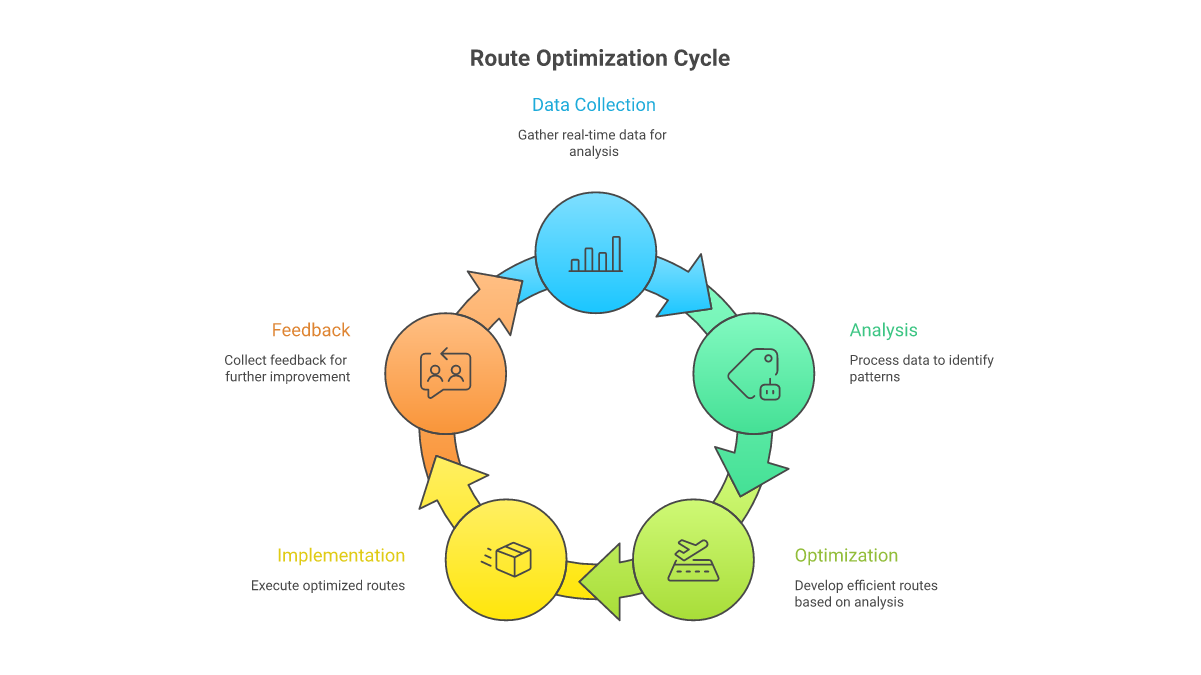
Real-time traffic data integration is crucial, enabling systems to adjust routes instantaneously based on live updates. This feature can shorten delivery times by 12-18% over traditional routing methods, an advantage especially vital in bustling cities.
Optimizing vehicle capacity now includes intricate loading strategies, considering weight, volume, and even delivery order. Such advanced systems can enhance vehicle usage by up to 35%, helping to minimize the number of vehicles needed.
Driver management features have advanced, accounting for work hour regulations, breaks, and even driver expertise. Automatically assigning routes based on driver skills and area knowledge boosts quality and satisfaction.
Modern solutions offer seamless integration with other business systems, thanks to APIs and pre-built links to ERP and warehouse systems. This connectivity ensures smooth data flow and real-time oversight of the whole supply chain.
Implementing Strategies and Best Practices
Successfully implementing route optimization software requires a well-planned approach that goes beyond just installing new tools. Research shows that companies adopting a comprehensive strategy achieve returns on investment 40% quicker than those with a piecemeal approach. Start with a full assessment of current operations and clear objectives.
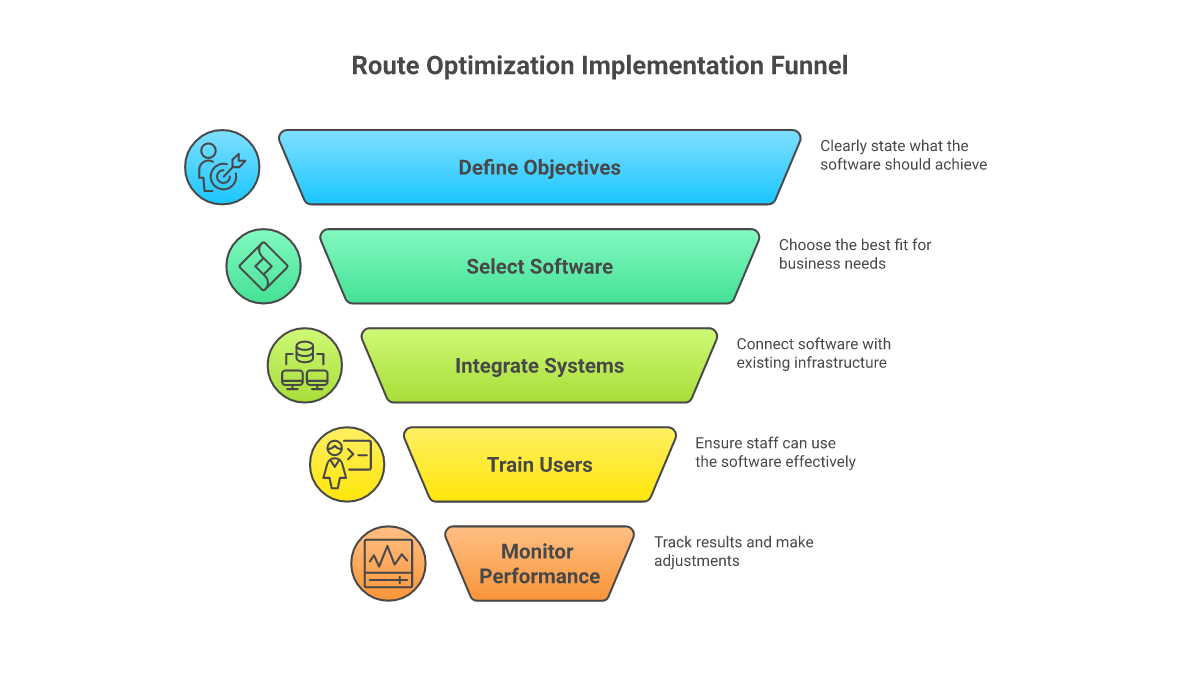
Data quality is essential in these projects. Companies must ensure they have reliable data on delivery spots, vehicle specs, and operational parameters. Studies reveal that poor data can slash routing efficiency by 30%, showing how vital accurate data is.
Change management is another key to success. Driver acceptance, especially, can make or break an implementation. Invest in training programs that boost user adoption rates by 25%, helping achieve full benefits 60% sooner than those who overlook this step.
Integrating with existing systems needs careful planning and staggered execution, often starting with core functions and adding complexity over time. This gradual method builds expertise while minimizing disruption.
Performance monitoring is crucial from day one. Top companies use KPIs to measure both tech performance (like route efficiency) and business results (like customer satisfaction). This helps sustain improvement and maximize value over time.
Emerging Technologies and Future Trends in Route Planning
AI and Machine Learning are at the forefront of route optimization. These systems analyze vast data to forecast traffic, timing, and disruptions with great precision. AI-enhanced tools can improve delivery accuracy by 40% over traditional setups.
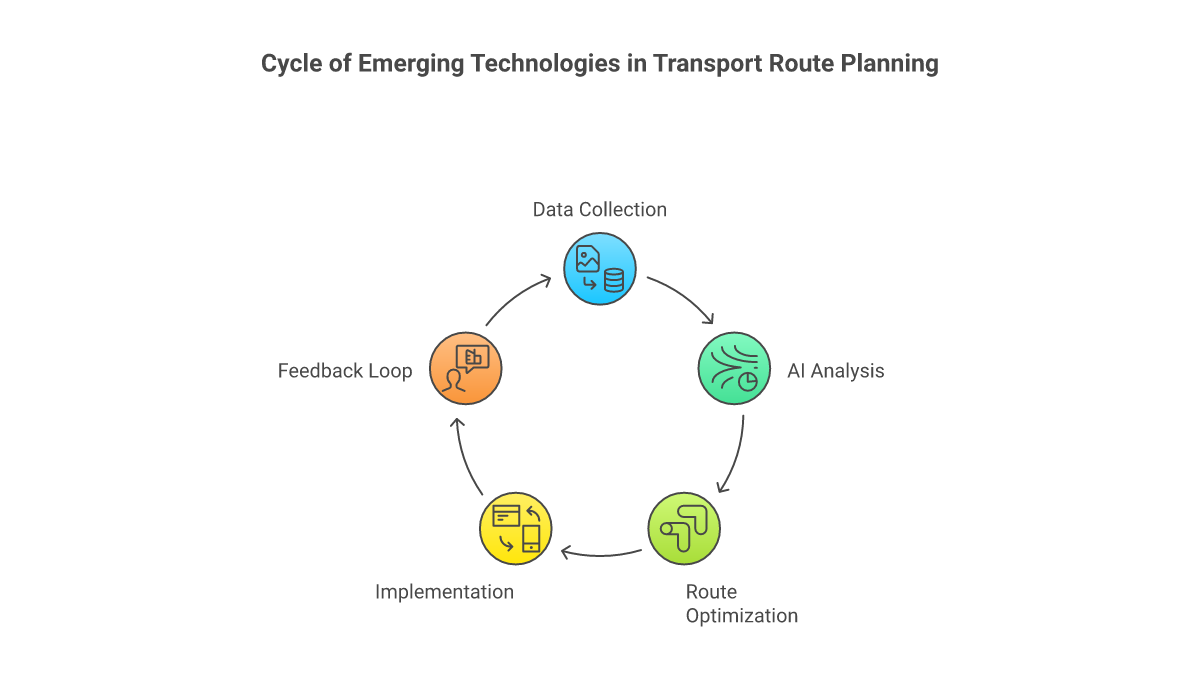
The Internet of Things is shaking up route optimization with real-time tracking of vehicles and goods. IoT devices provide continuous updates on location and condition, refining routing and maintenance strategies. Predictions say 85% of commercial vehicles will be IoT-enabled by 2026.
Autonomous vehicles are the next frontier, with route optimization tools adapting for these self-driving deliveries. These systems factor in charging stations, autonomous navigation, and integration with smart city frameworks.
Predictive analytics capabilities are advancing, allowing systems to foresee and adjust for disruptions before they happen. This proactive stance can cut delivery delays by 30% and boost customer satisfaction by 25%.
Sustainability features are gaining traction, letting companies measure carbon footprints and optimize for environmental impact. These tools align operational performance with corporate green goals.
Assessing Success and ROI
Calculating the ROI of route optimization software involves various elements. While slashed fuel costs, often 15-30%, are the most obvious benefit, a full analysis should consider broader gains and indirect perks.
Labor efficiency gains often eclipse fuel savings financially. Companies using advanced optimization solutions report slashing labor costs by 20-25% through better planning and fewer overtime demands, boosting the bottom line and worker satisfaction.
Customer satisfaction often improves markedly. On-time deliveries rise by 25-35%, and hitting delivery windows can improve by 40%. These enhancements boost retention and new business.
Vehicle use and upkeep costs are also reduced. Firms often cut fleet sizes by 15-20% thanks to enhanced routing, with maintenance costs dropping 25% thanks to proactive scheduling.
Reducing environmental impacts is increasingly valued in ROI. Companies report 20-30% lower CO2 emissions thanks to less mileage and better vehicle use, showing it’s possible to be green and efficient.
Successful Case Studies
Leading firms have shown striking results with smart route optimization adoption. DHL’s AI-driven optimization in Europe cut fleet miles by 15% and boosted on-time performance by 27%. Its knack for processing real-time traffic and delivery patterns proved invaluable, especially in urban areas.
Regional carriers also see big wins. A delivery company in the Pacific Northwest saw fuel costs fall by 32% within six months after implementing advanced optimization, thanks to better multi-stop route planning and workload balancing.
Retail giants like Walmart are using route optimization to thrive in the same-day delivery race. By adopting dynamic routing, Walmart expanded their same-day services while trimming delivery costs by 23%, with seamless integration to inventory and order systems being key.
Small businesses benefit as well. A local food delivery service cut delivery times by 35% and expanded their reach by 40% using a cloud-based optimization tool, ideal for their growing needs.
Municipal services benefit too. A European city’s waste collection project cut fuel use by 28%, improving reliability, with the system adept at managing complex schedules and constraints.
Conclusion and Looking Ahead
The route optimization software sector is where tech innovation meets operational need. With projections showing it hitting $42.65 billion by 2035, efficient route optimization is a must for competitive logistics.
To succeed, firms must combine technological savvy with practical strategies, focusing on data quality, adapting to change, and striving for improvement. The payoff includes cost cuts, better service, and notable environmental benefits.
In the future, integrating AI, IoT, and autonomous tech will bring even more sophisticated routing. Firms investing in this tech now are poised to excel amidst these trends, maintaining their edge in a complex logistics scene.